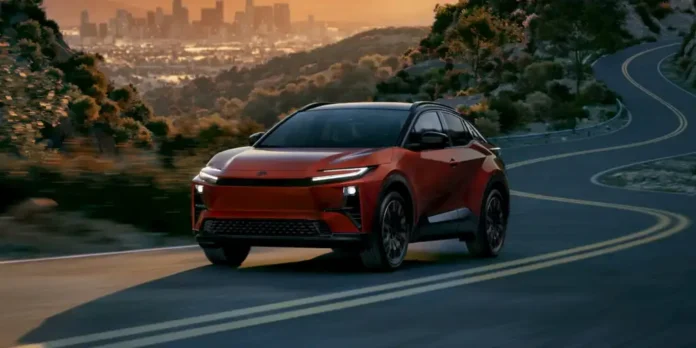
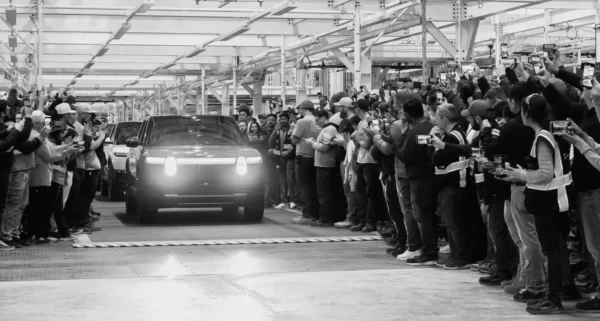
Rivian has officially begun rolling out validation units of its highly anticipated R2 electric SUV from its factory in Normal, Illinois, marking a major milestone for what many see as the most important vehicle in the company’s history. CEO RJ Scaringe confirmed the update, noting that Rivian remains on track to begin customer deliveries in the first half of 2026.
The R2 is widely viewed as Rivian’s potential “Model 3 moment”—a higher-volume, more affordable vehicle designed to move the brand beyond its premium R1T pickup and R1S SUV. For Rivian, success with R2 is less about expanding its lineup and more about proving it can scale sustainably.
A focused strategy pays off
To accelerate the R2 program, Rivian made a bold decision last year to pause construction of its planned Georgia factory and instead concentrate resources on launching R2 at its existing Illinois facility. That bet now appears to be paying off.
The Normal plant has undergone a significant transformation to support the new R2 platform, including a 1.1 million square-foot expansion and the installation of dedicated assembly lines. Rivian says the build-out and tooling were completed in record time to support the vehicle’s 2026 launch window.
R2 manufacturing validation builds are rolling off the line in Normal! Beyond excited to start delivering to customers soon. pic.twitter.com/uBpqYSsBZ8
— RJ Scaringe (@RJScaringe) January 15, 2026
Why validation builds matter
Validation builds represent the final phase before full, saleable production begins. Unlike early prototypes, these vehicles are produced on the actual production line using production tooling. They are used for:
Regulatory certification
Crash and safety testing
EPA range validation
The fact that R2 validation units are already rolling off the line in January suggests Rivian’s timeline is solid. While the company has guided for deliveries in the first half of 2026, industry observers increasingly believe late Q1 or early Q2 is now realistic.
Pricing and competition
Rivian has said the R2 will start at around $45,000, placing it squarely in the heart of the most competitive EV segment in the U.S. The target is clear: challenge the Tesla Model Y, which was the world’s best-selling vehicle last year.
As with many new launches, the first R2s to reach customers are expected to be higher-end trims, likely priced above the $45,000 entry point, before more affordable variants follow.
Final outlook: a defining moment
For Rivian, the R2 is more than a new SUV—it’s a make-or-break product. Validation builds moving through the factory signal real momentum, but the true test will come with execution at scale, pricing discipline, and sustained demand.
If Rivian can deliver the R2 on time and at the promised price, it won’t just broaden its customer base—it could redefine the company’s future. Whether the R2 becomes Rivian’s breakthrough or simply a strong contender will depend on what happens next, once those first customer deliveries begin.