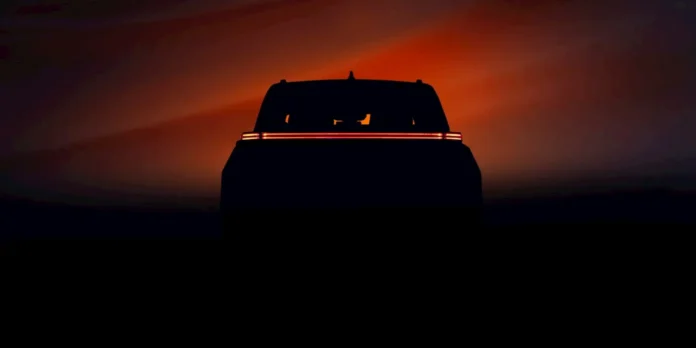
Ferrari has officially named its first fully electric car: Luce. Revealed quietly through an interior showcase in San Francisco, the announcement says a lot about Ferrari’s mindset. “Luce,” meaning light in Italian, isn’t positioned as a tech flex—it’s framed as philosophy. Electrification, Ferrari insists, is a means, not an end.
The most striking part isn’t the powertrain (yet), but the cabin—co-designed with LoveFrom, the creative group founded by Jony Ive and Marc Newson. After five years of collaboration, their influence is unmistakable. In a market obsessed with massive touchscreens, Ferrari has gone the opposite way: physical controls everywhere. Buttons, toggles, dials—designed to be felt, not swiped.
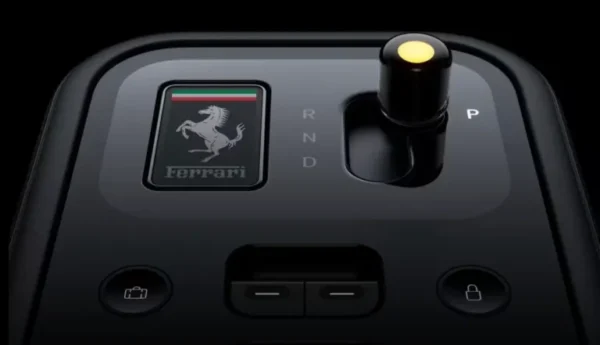
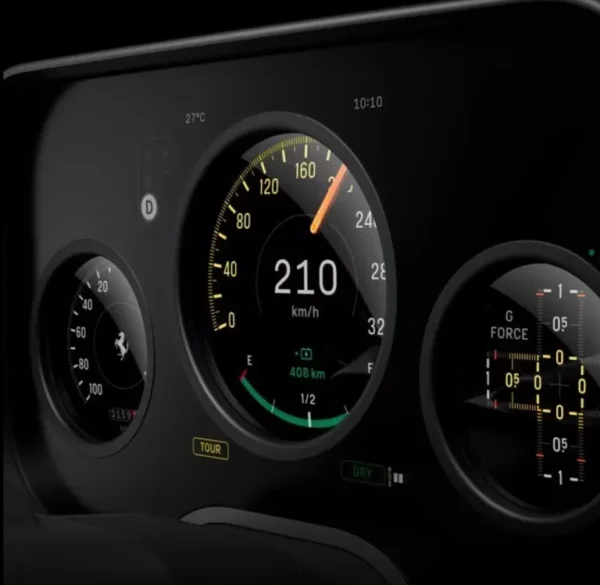
The steering wheel alone tells the story. Inspired by classic Nardi wheels from the 1950s and ’60s, it’s built from recycled aluminum, lighter than Ferrari’s current wheels, and arranged with modular controls echoing Formula One logic. The instrument binnacle moves with the wheel, housing overlapping Samsung OLED displays—a technical flex disguised as restraint.
Even the key feels ceremonial: crafted from Corning Fusion5 glass with an E Ink display, it changes state when docked, triggering a choreographed lighting sequence. It’s theater, yes—but intentional theater, rooted in tradition rather than novelty.
Specs remain closely guarded, but Ferrari has confirmed a price north of €500,000, placing Luce firmly above most electric hypercars. That suggests extreme performance, bespoke battery engineering, and low production volumes. Ferrari isn’t chasing range bragging rights or charging speed headlines—it’s chasing emotional continuity.
Final take: Luce doesn’t feel like Ferrari conceding to electrification. It feels like Ferrari redefining it on its own terms. If the driving experience matches the design philosophy, Luce may prove that the soul of a supercar doesn’t depend on cylinders—but on intention.