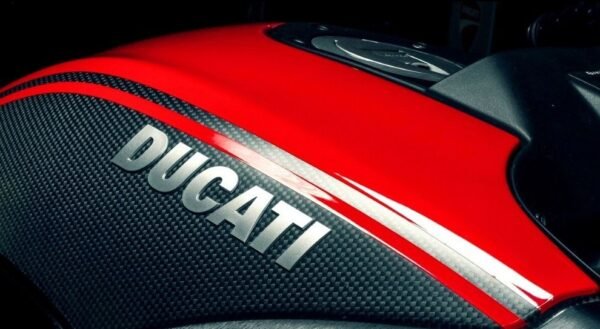
Ducati represents Italian performance engineering in the motorcycle world, combining racing heritage with distinctive design.
Why Ducati still feels different in a crowded motorcycle world
There are plenty of motorcycle brands that promise performance, style, or heritage—but very few combine all three as consistently as Ducati.
Even if you’ve never owned one, you probably already have an impression: red bikes, aggressive design, racing pedigree. But Ducati is more than just an image. It’s a brand built around a very specific philosophy—one that doesn’t always prioritize practicality, but almost always prioritizes emotion and performance.
This article takes a deeper look at:
- What defines Ducati’s identity
- Its most important models
- The engineering that makes it unique
- And the reality of owning one
Ducati Brand Identity: Racing first, everything else second
A brand shaped by competition
Ducati’s identity is inseparable from racing. Unlike many manufacturers that treat racing as marketing, Ducati builds its road bikes as extensions of its track machines.
From World Superbike dominance to MotoGP innovation, Ducati has always pushed performance boundaries. That mindset flows directly into production bikes.
Core elements of Ducati identity:
1. Racing DNA
- Technology trickles down from MotoGP
- Track performance influences road design
- Rider engagement is prioritized over comfort
2. High-performance engines
- Focus on power delivery and character
- Strong midrange and aggressive throttle response
3. Aggressive styling
- Sharp lines, minimal compromise
- Designed to look fast even when parked
4. Lightweight philosophy
- Emphasis on power-to-weight ratio
- Extensive use of aluminum, magnesium, carbon fiber
Compared to brands like Yamaha or Honda, Ducati feels less “neutral” and more intentional. It’s not trying to please everyone—it’s targeting riders who want something visceral.
Ducati Model Lineup: Four pillars that define the brand
1. Ducati Panigale – Pure superbike performance
The Ducati Panigale is Ducati’s flagship performance machine.
What makes it special:
- V4 engine derived from MotoGP tech
- Extremely high horsepower (200+ hp range)
- Advanced electronics (IMU, traction control, slide control)
- Aerodynamic winglets
Riding experience:
The Panigale is not forgiving. It’s fast, precise, and demanding. On the track, it feels alive. On the street, it can feel excessive.
👉 Best for:
- Experienced riders
- Track enthusiasts
- Performance-first buyers
2. Ducati Monster – Everyday performance icon
The Ducati Monster is arguably Ducati’s most recognizable model.
Key traits:
- Naked, minimalist design
- Lightweight and agile
- Strong midrange torque
Why it matters:
The Monster brought Ducati to a wider audience. It delivers Ducati character without the extreme demands of a superbike.
👉 Best for:
- Daily riders
- Urban commuting with personality
- Riders entering the Ducati ecosystem
3. Ducati Multistrada – Performance meets versatility
The Ducati Monster is arguably Ducati’s most recognizable model.
Key traits:
- Naked, minimalist design
- Lightweight and agile
- Strong midrange torque
Why it matters:
The Monster brought Ducati to a wider audience. It delivers Ducati character without the extreme demands of a superbike.
👉 Best for:
- Daily riders
- Urban commuting with personality
- Riders entering the Ducati ecosystem
3. Ducati Multistrada – Performance meets versatility
The Ducati Scrambler targets a different audience.
Characteristics:
- Retro-modern design
- Simpler mechanics
- More relaxed riding position
Purpose:
It’s Ducati’s most approachable line—less intimidating, more lifestyle-focused.
👉 Best for:
- New riders
- Style-focused buyers
- Casual weekend riding
Ducati Engineering Philosophy: Why it feels different
Desmodromic valves – the signature technology
One of Ducati’s most unique features is its desmodromic valve system.
How it works:
Instead of using springs to close valves, Ducati uses mechanical control for both opening and closing.
Benefits:
- More precise valve timing
- Higher RPM capability
- Improved performance consistency
Downsides:
- More complex
- Higher maintenance requirements
Performance-tuned engines
Ducati engines are designed to feel alive.
Common traits:
- Strong torque delivery
- Immediate throttle response
- Distinctive sound
Compared to smoother Japanese engines, Ducati engines often feel:
- More aggressive
- More engaging
- Less forgiving
Electronics: modern performance control
Modern Ducati bikes include:
- IMU-based traction control
- Cornering ABS
- Wheelie control
- Ride modes
- Quickshifters
These systems allow Ducati to push performance higher while maintaining safety.
Ownership Experience: The reality behind the passion
1. Maintenance and cost
Owning a Ducati is not cheap.
Key considerations:
- Higher service costs
- Premium parts pricing
- Specialized technicians
However, modern Ducati models have improved:
- Longer service intervals
- Better reliability than older generations
2. Community and brand loyalty
Ducati owners are often passionate.
Why?
- Strong brand identity
- Emotional connection
- Global enthusiast community
Owning a Ducati is often about belonging, not just riding.
3. Daily usability vs passion
Ducati bikes are not always the most practical.
Compared to brands like Kawasaki or Suzuki:
- They may be less comfortable
- More expensive to maintain
- More demanding to ride
But they offer something else: character.
Comparison with competitors
Ducati vs Japanese brands
- Ducati: emotional, performance-focused
- Japan (Honda, Yamaha): reliable, balanced
Ducati vs BMW
- Ducati: aggressive, sporty
- BMW Motorrad: technology, comfort
Ducati vs KTM
- Ducati: refined performance
- KTM: raw, aggressive
Personal perspective: why people choose Ducati
From experience, Ducati is rarely a “logical” purchase.
People choose Ducati because:
- It looks better
- It feels more exciting
- It creates a stronger connection
You don’t just ride a Ducati—you experience it.
Final verdict: is Ducati worth it?
Pros:
- Exceptional performance
- Unique engineering
- Strong design identity
- Emotional riding experience
Cons:
- Higher cost of ownership
- Less practical for daily use
- Can be demanding for beginners
Conclusion: Ducati is about passion, not perfection
Ducati doesn’t try to be the most practical motorcycle brand—and that’s exactly why it stands out.
If you want:
- Reliability above all → look elsewhere
- Comfort and simplicity → look elsewhere
But if you want:
- Emotion
- Performance
- A bike that feels alive
Then Ducati delivers something few brands can match.
👉 In the end, Ducati isn’t just a motorcycle.
It’s a statement about how you want to ride.