
Uber appears to be redefining its relationship with Waymo as the race to commercialize autonomous ride-hailing accelerates.
Although Waymo robotaxis currently operate through Uber’s app in cities including Austin and Atlanta, Uber executives have recently become more vocal in criticizing the limitations of fully autonomous ride-hailing models. At the same time, the company is investing heavily in alternative robotaxi partnerships involving Rivian, Lucid Motors, and Nuro.
The shift suggests Uber is trying to reduce long-term dependence on any single autonomous driving provider, including Waymo itself.
According to a recent Business Insider report, Uber executives have increasingly framed fully autonomous fleet operators as less flexible and less scalable than Uber’s hybrid model, which combines human drivers with robotaxis on the same platform.
Some of the criticism has been unusually public.
In April, Uber CTO Praveen Neppalli posted a video on X showing a Waymo vehicle navigating around a San Francisco Muni bus in what he described as a concerning traffic interaction. The post highlighted broader industry concerns around edge cases — unusual or unpredictable situations that autonomous systems can still struggle to handle reliably.
CEO Dara Khosrowshahi has also emphasized that autonomous driving technology remains early in its commercial development cycle. While acknowledging the long-term potential of robotaxis, he recently suggested the technology still falls short of the reliability standards customers expect from large-scale transportation services.
Uber has additionally argued that robotaxi deployment patterns remain uneven.
In a recent policy paper, the company criticized autonomous vehicle operators for concentrating deployments in wealthier urban areas while offering limited service in broader regional markets. Although the paper did not directly target Waymo by name, the comments aligned closely with ongoing discussions surrounding Waymo’s Bay Area expansion.
At the same time, Uber is aggressively investing in its own autonomous ecosystem.
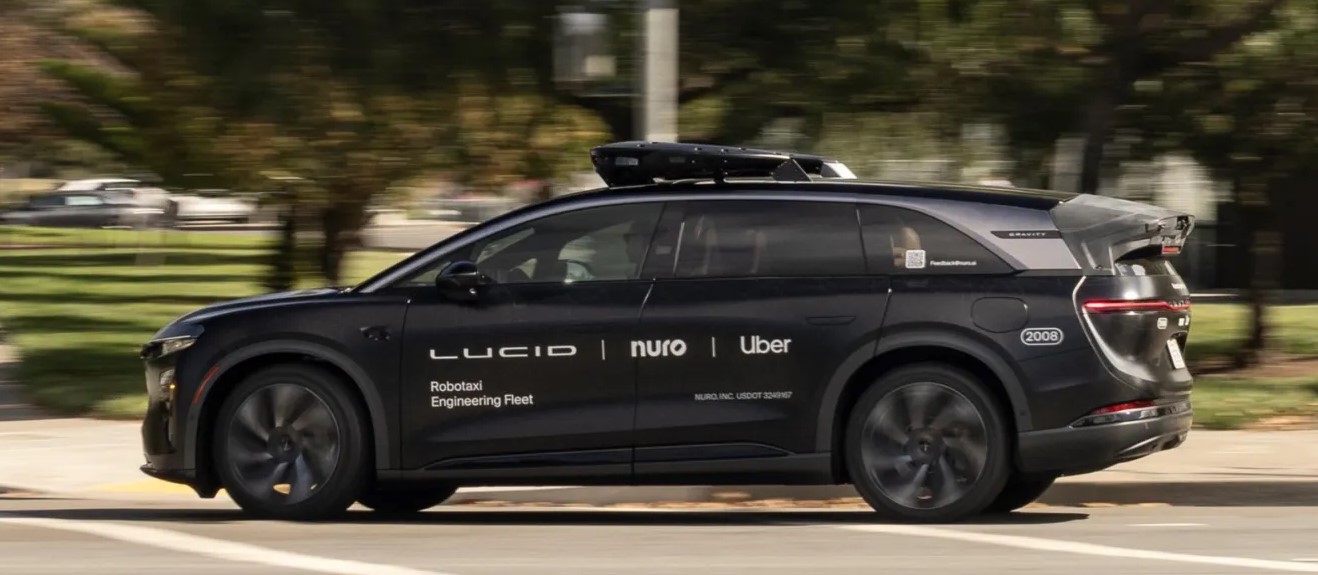
The company has committed more than $10 billion toward autonomous vehicle partnerships and infrastructure, including direct investments and large-scale vehicle procurement agreements. One of the largest involves Lucid, where Uber now owns an 11.5% stake after a $500 million investment tied to plans for at least 35,000 autonomous Lucid Gravity SUVs equipped with Nuro’s Level 4 autonomous driving system.
Uber has also committed up to $1.25 billion through its partnership with Rivian to deploy as many as 50,000 autonomous Rivian R2 vehicles beginning later this decade.
Meanwhile, Nuro recently secured a California permit allowing driverless testing of Lucid Gravity vehicles without a safety driver, an important step ahead of Uber’s planned commercial robotaxi rollout in San Francisco.
The company is simultaneously expanding partnerships globally.
Uber is working with Baidu’s Apollo Go in Dubai, Wayve in London, and Avride in Dallas. It has also committed roughly $100 million toward dedicated autonomous vehicle charging infrastructure.
Taken together, the strategy points toward a more diversified robotaxi network rather than reliance on a single technology stack or operating partner.
That creates an increasingly unusual dynamic with Waymo.
Waymo remains one of the most advanced autonomous ride-hailing operators currently in commercial service, delivering roughly 400,000 paid rides per week across 10 US cities. The company plans to scale that figure to 1 million weekly rides by the end of 2026 and continues expanding both its fleet and service footprint.
At the same time, Uber appears determined to avoid becoming dependent on a direct competitor controlling the underlying autonomous driving platform.
The two companies are effectively cooperating and competing simultaneously.
Waymo provides autonomous technology and operational expertise, while Uber contributes customer demand, ride-hailing infrastructure, and market reach. But as Uber builds alternative partnerships and Waymo expands independently, the long-term balance between collaboration and competition may become more complicated.
For now, the relationship reflects the broader state of the autonomous vehicle industry itself: rapidly growing, increasingly interconnected, and still evolving toward a sustainable large-scale business model.


