Automakers and battery makers around the world are racing to crack the next generation of EV batteries. The goal is simple but brutal: lower costs, improve safety, charge faster, and go farther. For years, solid-state batteries have been treated as the holy grail—promising up to double the energy density of today’s lithium-ion cells. The problem? Making them at scale has proven far harder than the theory.
That may finally be changing.
This week, FAW Group, one of China’s oldest and largest automakers, announced it had installed what it calls the industry’s first lithium-rich manganese semi-solid-state EV battery in a vehicle. The battery was developed by FAW’s in-house battery arm alongside a research team led by Nankai University academician Chen Jun.
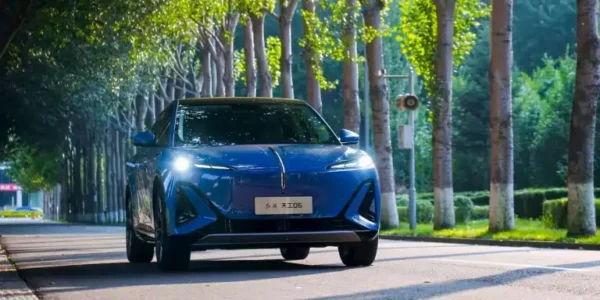
The headline numbers are striking. FAW says the cell energy density exceeds 500 Wh/kg, with a 142 kWh battery pack capable of delivering over 1,000 km (620 miles) of CLTC range. Even allowing for optimistic test cycles, those figures hint at a step-change compared with current production EVs.
FAW isn’t alone. Late last year, SAIC Motor claimed the first mass-produced semi-solid-state EV with the MG4. More recently, Dongfeng Motor began extreme-cold testing of solid-state battery prototypes, also targeting 1,000 km-plus range. Together, these announcements suggest China’s “big four” automakers are converging rapidly on post-lithium solutions.
Notably, approaches differ. FAW’s manganese-rich chemistry aims to boost energy density without heavy reliance on expensive nickel. Others are pushing high-nickel NCM and NCA cells. Meanwhile, global players like Toyota, BYD, and CATL are betting on sulfide-based solid-state batteries for their balance of safety, conductivity, and long-term scalability.
Final take: None of this means solid-state batteries will suddenly flood the market tomorrow. But the clustering of real-world installations, prototype testing, and semi-solid-state launches suggests the industry is crossing a threshold. The next few years won’t just decide who wins the solid-state race—they’ll decide whether today’s lithium-ion batteries start to feel obsolete sooner than anyone expected.