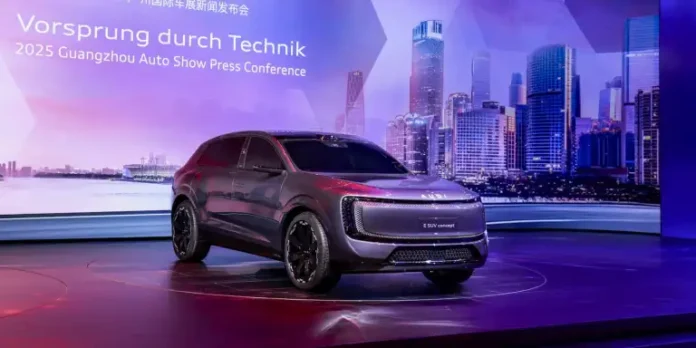
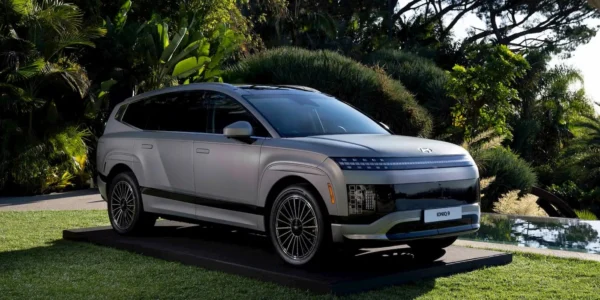
Hyundai Motor Company may not have expected its flagship three-row EV to dominate headlines so quickly, but the Hyundai IONIQ 9 has turned into a genuine home-market success. After launching in early 2025, the large electric SUV sold 8,227 units in Korea last year — five times more than its platform sibling, the Kia EV9, which managed 1,549 units over the same period.
That’s a notable achievement, especially considering both models share Hyundai Motor Group’s E-GMP platform. The IONIQ 9’s stronger reception suggests Hyundai’s design direction, pricing strategy, and feature mix resonated more clearly with domestic buyers.
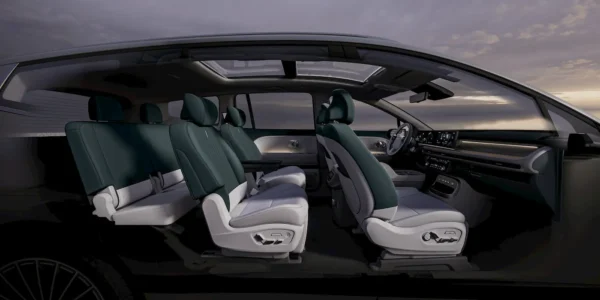
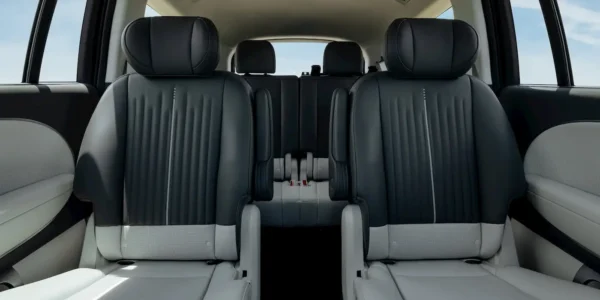
Praised for its up to 532 km range, spacious three-row layout, fast-charging capability, and starting price of around 60 million won ($41,500), the IONIQ 9 strikes a balance between practicality and premium appeal. Its Vehicle-to-Load (V2L) functionality has proven especially popular among families, offering a mobile power source for camping and outdoor use — a feature that adds tangible lifestyle value beyond simple transportation.
The model’s momentum was further cemented by sweeping Korea’s 2026 Car of the Year awards, earning a triple crown judged by leading automotive journalist associations. To celebrate, Hyundai introduced new EV promotions, including direct discounts and substantial coupon incentives — reinforcing its commitment to accelerating EV adoption.
But the bigger question is whether the IONIQ 9 could replicate this success abroad.
In the United States and Canada, demand for large three-row SUVs remains strong. Buyers prioritize interior space, towing capability, technology, and safety. Against rivals like the Kia EV9, Tesla Model X, and upcoming electric SUVs from GM and Ford, the IONIQ 9’s competitive pricing and long range could make it appealing — especially with Hyundai offering significant incentives and 0% APR financing. However, brand perception and charging infrastructure confidence will play a key role.
In Australia, where large SUVs are popular and road trips are common, the IONIQ 9’s long range and V2L feature could align well with lifestyle needs. Pricing would be critical, as EV adoption there remains sensitive to upfront cost.
Europe presents a more nuanced challenge. Large SUVs face higher taxes and tighter urban regulations in some markets. While family buyers may appreciate the space and efficiency, overall demand for oversized vehicles is more limited compared to North America.
In my view, the IONIQ 9’s success in Korea demonstrates Hyundai’s growing maturity in the EV era. It combines scale, practicality, and real-world usability — not just futuristic styling. If priced strategically and supported by strong incentives, it has genuine global potential. The key will be adapting positioning to each region’s priorities rather than assuming domestic success automatically translates overseas.