Xpeng has released the first official images of the GX, its new flagship six-seat SUV—and it’s very clear who it wants to challenge. With its upright stance, slanted A- and B-pillars, and split tailgate, the GX wears its Land Rover Range Rover inspiration openly. But beneath that familiar silhouette, Xpeng is betting that technology, not heritage, is what defines modern luxury.
The GX sits at the top of Xpeng’s lineup and targets China’s hottest premium family SUV segment. Its rivals read like a who’s who of domestic heavyweights: the Li Auto L9, Huawei Aito M9, Zeekr 9X, the upcoming NIO ES9, and BYD’s Denza N9. All promise space, comfort, and tech—but few try to rethink the formula as aggressively as Xpeng does here.
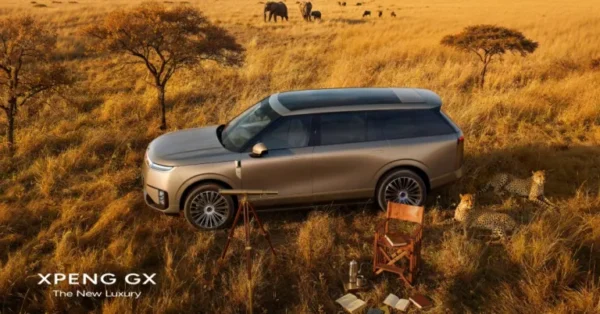
Built on Xpeng’s SEPA 3.0 “physical AI” architecture, the GX goes all-in on software-led engineering. Steer-by-wire, rear-wheel steering, an AI-adaptive chassis, and an AR head-up display replacing traditional gauges signal a car designed around sensors and computation rather than mechanical convention. Xpeng is also doubling down on vision-based autonomy, skipping roof-mounted LiDAR entirely.
The real differentiator may be powertrain choice. Alongside a full BEV version, the GX is expected to offer an extended-range (EREV) variant capable of over 1,000 km of mixed driving—directly addressing range anxiety, a key selling point for rivals like Li Auto.
Final take: The GX isn’t trying to out-Range Rover the Range Rover. It’s trying to redefine luxury around intelligence, efficiency, and usability. If Xpeng can deliver refinement to match its ambition, the GX could be one of the most serious homegrown challenges yet to China’s premium SUV establishment.