
A little-known Chinese equipment maker may be quietly reshaping the future of mining. Boonray has developed an autonomous, battery-swapping electric mining truck—and just received a serious vote of confidence from BYD, which invested RMB 100 million (~$14.5 million) to accelerate the project.
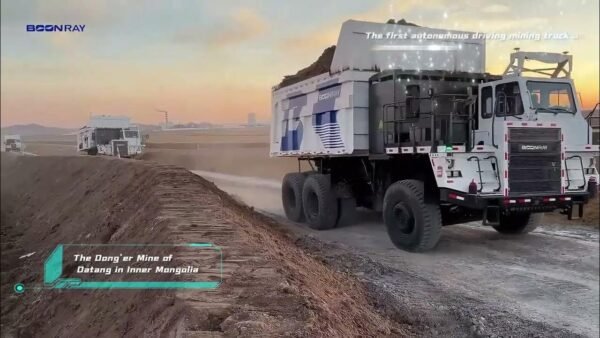
Boonray’s roots are unusually academic. Led by scientists from Shanghai Jiao Tong University, the company has focused on the hard problems most OEMs avoid: vehicle-by-wire systems, AI decision-making, and true Level-4 autonomy in constrained, hazardous environments. Mining is the ideal proving ground—repetitive routes, fixed reference points, and high safety stakes.
Crucially, this isn’t a lab demo. Boonray says its trucks are already operating across 30 mining sites in China, handling different ore types and complex conditions. The system combines onboard sensors with site infrastructure (beacons and fixed markers) to enable unmanned driving and unmanned battery swapping, keeping trucks moving 24/7 while reducing human exposure to danger.
The timing matters. China’s electrified heavy-duty truck market just posted a record month, with over half of new heavy trucks sold in December being electrified. In that context, BYD’s investment looks less like a gamble and more like a strategic extension—electrification where diesel’s drawbacks are most acute.
Battery swapping is the real unlock here. In mining, downtime is money. Swapping avoids long charge cycles, stabilizes fleet utilization, and pairs naturally with autonomy. It’s a combination that could dramatically cut operating costs while improving safety and emissions.
Final take: Boonray’s trucks won’t make headlines like passenger EVs—but they may matter more. If autonomy and battery swapping can scale in mines, the blueprint could spread to ports, construction, and logistics worldwide. BYD’s backing suggests this isn’t a science project—it’s an early glimpse of industrial electrification’s next chapter.


