The difference between a plug-in hybrid vehicle and a conventional hybrid is quite simple:
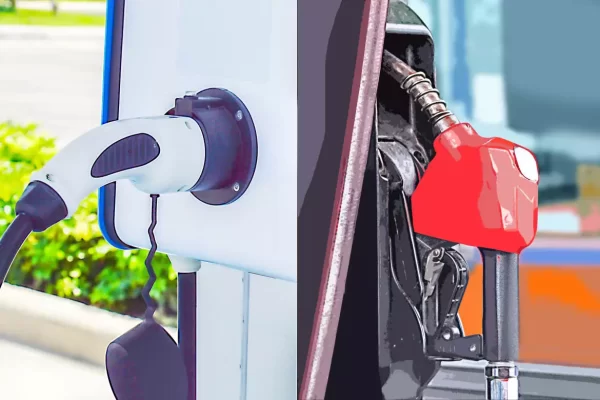
A plug-in hybrid can be connected to an outside electrical source for charging its battery, while a conventional hybrid cannot.
Plug-in hybrids — also known as plug-in hybrid electric vehicles, or PHEVs — generally have a larger and more powerful battery than their plug-free hybrid counterparts, enabling them to operate entirely on electrical power like a purely electric vehicle that has no gas engine. Like an electric car, PHEVs can be charged using any household 120-volt outlet for power, but charging time is much faster using a 240-volt charger either at home or at a public charging station.
Having considerably smaller battery packs than purely electric vehicles is what allows many PHEVs to get by without 240-volt charging; they simply require less power and can charge overnight. But if you want to preheat or precool the cabin before unplugging — a recommended step to preserve your electric range — a 240-volt connection is more effective. Their added complexity and larger batteries make PHEV models more expensive than their regular hybrid counterparts, although federal tax credits can make up at least part of the difference (and state incentives might also be available, depending where you live). What’s more, the fact that PHEVs can be used as purely electric vehicles at least part of the time can add to the appeal for some drivers while minimizing range anxiety with the backup of gasoline engines.
Just don’t see a PHEV badge and assume you’ll be able to go all that far on electric power alone, though, because the ranges vary greatly.
If a plug-in minivan is something you’re looking for, you have one option: the 2024 Chrysler Pacifica Hybrid, which is good for an EPA estimated 32 miles of electric range. For those looking for a minivan with a conventional hybrid powertrain, the Toyota Sienna comes only as a hybrid, and for 2025, Kia will offer a hybrid version of its Carnival minivan.
Other than their electric-only range, PHEVs are pretty similar to conventional hybrids to live with and drive. Most plug-ins are versions of models sold otherwise only as regular gas-powered vehicles, such as the aforementioned Pacifica Hybrid, which is based on the regular Pacifica minivan.