
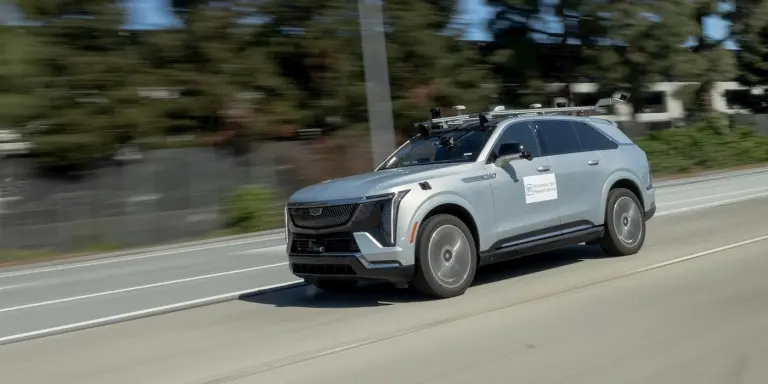
General Motors is preparing to take a major step forward in autonomous driving, and it’s starting with its largest and most premium EV. The Cadillac Escalade IQ will be the first GM vehicle to introduce a new generation of “eyes-off” self-driving technology, initially focused on highway use.
While the feature won’t arrive until around 2028, GM has already begun real-world testing — signaling that its next phase of autonomy is moving beyond driver-assist systems into something far more advanced.
From Super Cruise to Eyes-Off Driving
GM’s new system builds directly on its existing Super Cruise platform, which has already accumulated over 800 million miles of customer usage. However, this next step goes significantly further.
Unlike current hands-free systems that still require driver attention, “eyes-off” driving means:
- Drivers can disengage visually from the road
- The system assumes full responsibility under defined conditions
- Human intervention is only required when prompted
For now, GM plans to deploy this capability on highways first, where conditions are more predictable and easier to manage.
Technical Foundation: A Major Leap in Computing Power
At the core of the system is a new centralized computing platform designed to unify:
- Infotainment
- Safety systems
- Vehicle propulsion
- Autonomous driving functions
GM claims the platform delivers:
- 35× more AI processing power
- 1,000× more data bandwidth
This level of performance is essential for handling real-time sensor fusion and decision-making at higher levels of autonomy.
Sensor Strategy: A Hybrid Approach
Unlike some competitors that rely heavily on cameras, GM is taking a more comprehensive approach by integrating:
- LiDAR
- Radar
- Cameras
These sensors are embedded directly into the vehicle’s structure, enabling:
- More accurate environmental mapping
- Redundancy for safety
- Better performance in complex or low-visibility conditions
This multi-sensor strategy is generally considered more robust, though it also increases system complexity and cost.
Real-World Testing: Scaling Up Gradually
GM has already:
- Logged over 1 million miles of testing across 34 states
- Begun supervised highway testing in California and Michigan
- Planned a fleet of over 200 test vehicles
During this phase, a human driver remains behind the wheel, ready to take control if needed. This approach reflects a cautious rollout strategy focused on safety validation before consumer deployment.
Why the Escalade IQ?
The Escalade IQ is an interesting choice as the launch platform.
- Length: over 224 inches
- Positioned as a flagship luxury EV
- Higher price point allows for advanced tech integration
From a strategic perspective, it makes sense. Premium buyers are more likely to adopt new technologies early, and the Escalade brand already represents innovation and comfort in GM’s lineup.
Competitive Landscape: A Crowded Race
GM is not alone in pushing toward eyes-off driving. Several automakers are developing similar systems:
- Mercedes-Benz (already offering limited Level 3 autonomy)
- Tesla (Full Self-Driving, still evolving)
- Ford, Rivian, Lucid, Stellantis
The key difference lies in approach:
- Tesla: vision-based, software-first
- GM: sensor-rich, hardware-supported
- Mercedes: highly controlled, regulation-first deployment
Each strategy reflects a different balance between scalability, cost, and safety.
Technical Assessment: Strengths and Challenges
Strengths:
- Significant leap in computing capability
- Robust sensor suite (LiDAR + radar + cameras)
- Built on a proven Super Cruise foundation
- Clear phased rollout strategy
Challenges:
- High system complexity and cost
- Regulatory approval for eyes-off driving
- Real-world reliability at scale
- Competition moving at similar speed
Final Verdict: A Serious Step Toward True Autonomy
GM’s next-generation self-driving system represents more than just an upgrade — it’s a shift toward genuine autonomy in consumer vehicles.
By combining a powerful computing platform with a multi-sensor approach, GM is positioning itself as a serious contender in the race toward Level 3 and beyond.
Clear opinion:
The Escalade IQ may not be the first vehicle to offer eyes-off driving, but it could be one of the most balanced implementations. If GM executes well, this system has the potential to move autonomous driving from a niche feature into a practical, everyday tool — especially on highways where it matters most.