
A major milestone for electric trucking has just been reached in California—and this one actually matters beyond headlines.
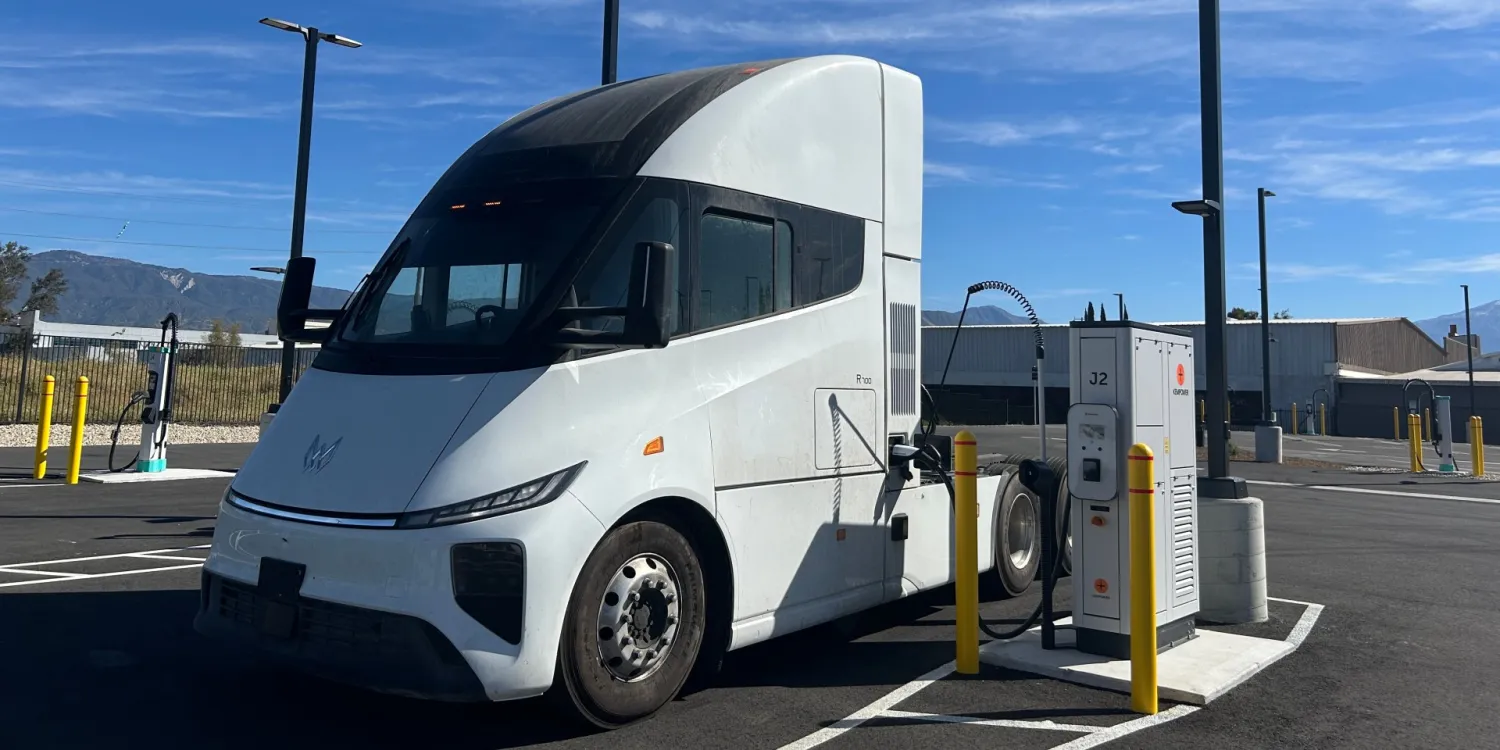
Kempower, Windrose Technology, and EV Realty have successfully completed a Megawatt Charging System (MCS) session at a new charging hub in San Bernardino. This marks the first time a Kempower Mega Satellite MCS charger has been used in North America.
At first glance, it sounds like another “tech demo.” But in reality, this could be a turning point for the entire heavy-duty EV industry.
Why MCS Is So Important (And Why It’s Been Missing)
The Megawatt Charging System (MCS) is designed specifically for heavy-duty electric trucks—vehicles that simply outgrow today’s charging standards.
The Key Difference:
- Typical DC fast chargers: 150–350 kW
- MCS: 1,000+ kW (1 MW and beyond)
That’s not just an upgrade—it’s a different category entirely.
- What this enables:
- Dramatically shorter charging times
- Reduced downtime for logistics fleets
- Higher vehicle utilization (critical for profitability)
- My take:
Without MCS, long-haul electric trucks were always going to struggle. Charging time—not range—has been the real bottleneck.
Inside the San Bernardino Charging Hub
The test took place at EV Realty’s purpose-built heavy-duty charging site in San Bernardino, California—scheduled to open in April 2026.
🔌 Technical Setup:
- 1,200 kW Kempower Power Unit
- Two Mega Satellite MCS dispensers
- Up to 1.2 MW output
- Up to 1,500 amps continuous current
❄️ Thermal Engineering Matters
At this level of power, heat becomes a serious problem.
That’s why the system uses:
- Liquid-cooled charging cables
These are not optional—they are essential to:
- Maintain stable current flow
- Prevent overheating
- Ensure safety at megawatt-scale charging
- This is one of the most underrated technical challenges, and solving it is a big deal.
Not Just a Demo: Real Infrastructure Is Finally Catching Up
For years, the industry has been asking a simple question:
“Where will electric trucks actually charge?”
Truck manufacturers have already announced long-range electric models capable of MCS charging. But without infrastructure, those capabilities are meaningless.
That’s what makes this milestone different.
According to EV Realty, the site is designed to support:
- Multi-brand compatibility
- Real-world fleet operations
- Future MCS-enabled trucks arriving later in 2026
– My perspective:
This is less about proving the tech works—and more about proving the ecosystem is finally forming.
Kempower’s Bigger Strategy: Scaling Beyond the US
While this is the first North American deployment, Kempower has already been active in Europe, testing MCS systems with:
- Truck manufacturers
- Logistics operators
- Charging network providers
This matters because MCS success depends on:
- Standardization
- Cross-industry compatibility
- Real-world testing at scale
– In other words, one charging station is not enough—the network effect is everything.
What This Means for Electric Truck Adoption
Let’s be clear:
Electric trucks won’t scale globally until three things align:
✔ Vehicle capability
✔ Charging infrastructure
✔ Operational economics
MCS directly impacts all three.
Real-world impact:
- Faster turnaround = more deliveries per day
- Lower idle time = better ROI for fleets
- Reduced pressure on battery size (less need for oversized packs)
- This could actually make electric trucks more economically viable than diesel in certain routes.
Limitations: What Still Needs to Be Proven
Despite the progress, there are still open questions:
- Will MCS infrastructure scale fast enough?
- How will grid capacity handle megawatt-level demand?
- Will different truck brands adopt a unified standard?
– My honest view:
We’re still early. This is a proof of readiness, not full deployment.
Conclusion: A Necessary Step Toward Scalable Electric Freight
The successful MCS charging session in California is more than a technical achievement—it’s a signal that the heavy-duty EV ecosystem is finally becoming real.
Not perfect. Not widespread. But real.
My conclusion:
If infrastructure like this continues to roll out at scale, electric long-haul trucking could move from experimental to commercially viable faster than expected.
And for the first time, it feels like charging is no longer the weakest link—it’s becoming part of the solution.


