
MG Motor is making a bold claim: bringing semi-solid-state battery technology—long seen as the “next big thing” in EVs—into mass production and rolling it out to Europe by the end of 2026.
On paper, that sounds like a breakthrough. In reality, it’s something more nuanced—and potentially more important.
From Concept to Reality: What MG Has Actually Achieved
Backed by SAIC Motor, MG introduced the new MG4 EV at the Chengdu Auto Show, calling it the world’s first mass-produced EV equipped with a semi-solid-state battery.
Deliveries in China began in late 2025, with prices starting at around $14,500—an aggressive figure that immediately caught attention.
Now, MG plans to bring this same technology to Europe in 2026.
But here’s the key point:
This isn’t “full” solid-state battery technology yet—it’s a hybrid step forward.
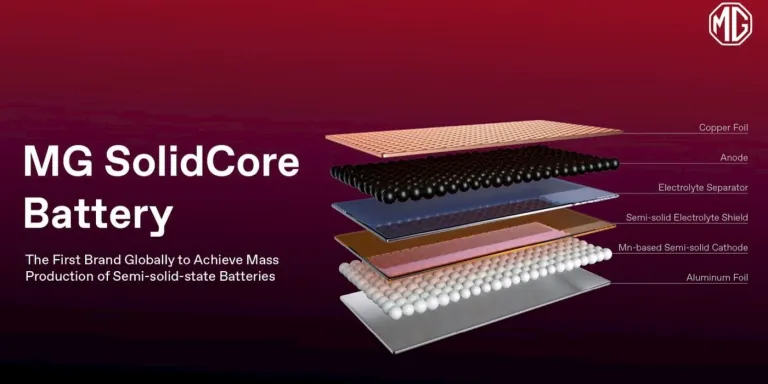
What Is a Semi-Solid-State Battery (And Why It Matters)?
To understand the significance, we need to simplify the tech:
- Traditional EV batteries use liquid electrolytes
- Solid-state batteries replace them with solid materials
- Semi-solid-state sits in between
⚙️ What MG’s SolidCore Battery Improves:
- Higher energy density → longer driving range
- Better thermal stability → improved safety
- Faster charging potential
- Stronger cold-weather performance
- Longer battery lifespan
MG also highlights that the solid electrolyte forms a protective internal layer, reducing degradation over time.
– My take:
This is less about a dramatic leap and more about a practical, scalable upgrade—which might actually matter more in the short term.
Real-World Specs: Promising, But Context Matters
The Chinese version of the MG4 uses:
- 53.95 kWh semi-solid manganese-based lithium battery
- 530 km CLTC range (~330 miles)
- Starting price: ~102,800 yuan ($14,500)
However, once it reaches Europe under WLTP standards:
- Expected range: ~400 km (248 miles)
That drop is normal—CLTC is more optimistic than WLTP—but it’s important for realistic expectations.
Pricing Strategy: Still MG’s Biggest Advantage
In China, the pricing is extremely aggressive.
In Europe, the new semi-solid MG4 is expected to start around:
- £23,495 (~$31,300)
That puts it roughly in line with the current MG4 Urban, which uses a conventional LFP battery.
– This is where things get interesting:
If MG delivers improved battery tech without increasing price, it could:
- Undercut competitors
- Accelerate adoption of next-gen battery tech
- Strengthen its position as a value leader in Europe
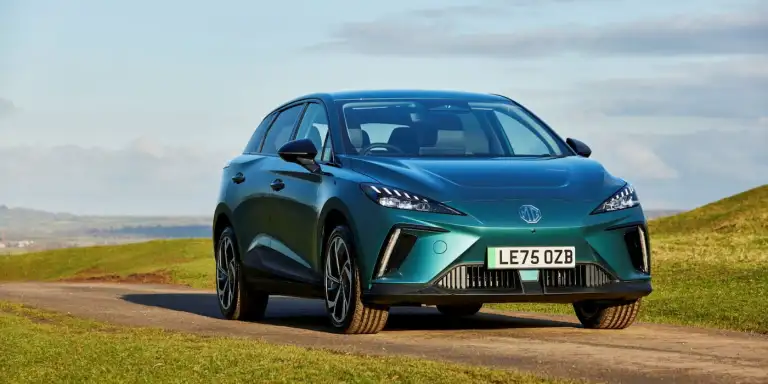
Comparing to Today’s MG4: Is It a Big Upgrade?
Current MG4 Urban (Europe):
- 53.9 kWh LFP battery
- ~258 miles WLTP range
New semi-solid MG4:
- Similar battery size
- Slightly lower WLTP estimate (~248 miles expected early figure)
- But with better efficiency potential, durability, and charging behavior
– So the upgrade is not just about range—it’s about battery quality and long-term usability.
Expansion Beyond MG4: A Platform Shift
MG has already confirmed that the new battery tech will expand into future models, including:
- MG 4X
This suggests MG isn’t treating semi-solid batteries as a one-off feature—but as a core platform strategy.
The Bigger Picture: Industry Context
While MG is first to mass production (according to its claim), other automakers are:
- Testing full solid-state batteries in prototypes
- Targeting commercialization closer to 2027–2030
– My perspective:
MG may not have the “final form” of battery tech—but it could win by being first to scale something usable today.
My Evaluation: Breakthrough or Smart Timing?
Let’s be clear:
✔ Strengths
- First-mover advantage in semi-solid-state mass production
- Strong price-to-tech ratio
- Practical improvements (not just theoretical gains)
- Clear rollout plan to Europe
✔ Limitations
- Not full solid-state yet
- Real-world performance still needs validation
- Range gains are modest (for now)
- Infrastructure and charging speed claims remain unproven in Europe
Conclusion: A Quiet but Important Shift in EV Technology
MG’s semi-solid-state battery isn’t a revolution—but it might be something more valuable: a realistic bridge to the future of EVs.
Instead of waiting for perfect solid-state batteries, MG is pushing forward with a solution that can be manufactured, sold, and scaled today.
My view:
If MG keeps pricing competitive and delivers consistent real-world performance, this could become a turning point for affordable next-gen EVs in Europe.
Not flashy. Not overhyped.
But exactly the kind of progress the EV market actually needs right now.


