Toyota has announced a new $1 billion investment in its US manufacturing network, with a strong focus on preparing for expanded electric vehicle (EV) production. The move is part of a broader plan to invest $10 billion in US facilities over the next five years, signaling a more serious push into EVs after years of cautious positioning.
Where the Money Is Going
The investment is split across two major facilities:
- $800 million allocated to the Kentucky plant
- $200 million directed to the Indiana plant
In Indiana, the funding will support increased production of the Grand Highlander, one of Toyota’s best-selling SUVs. The model will be built alongside the Sienna minivan and Lexus TX, reinforcing Toyota’s strategy of maximizing output for high-demand vehicles.
The larger portion — the $800 million investment in Kentucky — is where the bigger story lies.
Preparing for a Second US-Built EV
Toyota confirmed that the Kentucky plant is being upgraded to support production of its second battery electric vehicle in the US.
While the company has not officially revealed the model, a few key details stand out:
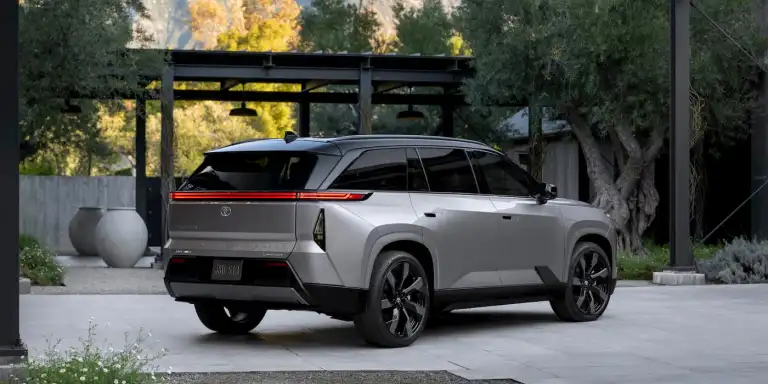
- The plant is already preparing for a three-row electric SUV (Highlander BEV) expected later this year
- The new investment suggests another EV model is already in the pipeline
- Production upgrades will also support increased output of existing models like the RAV4 and Camry
From a strategic standpoint, Toyota is clearly expanding its EV footprint in North America — not just experimenting with a single model.
What Could the New EV Be?
Although Toyota has not confirmed specifics, industry reports point to two likely directions:
1. Electric RAV4
This would be the most logical choice:
- RAV4 is one of Toyota’s best-selling global models
- Fits perfectly between compact and midsize EV segments
- Strong demand already exists
2. Electric Land Cruiser
A more ambitious option:
- Targets premium off-road segment
- Competes with models like Jeep Wrangler and Land Rover Defender
- Higher margins but smaller volume
There is also speculation that Toyota could be producing a Subaru co-developed EV, though this would not fully align with the “second Toyota EV” messaging.
Technical Direction: Multi-Pathway Still in Play
Toyota continues to emphasize its “multi-pathway” electrification strategy, which includes:
- Hybrid vehicles
- Plug-in hybrids
- Battery electric vehicles
However, this investment suggests a gradual shift:
- Increased focus on dedicated EV production
- Expansion of battery manufacturing capability
- Preparation for larger, higher-volume EV models
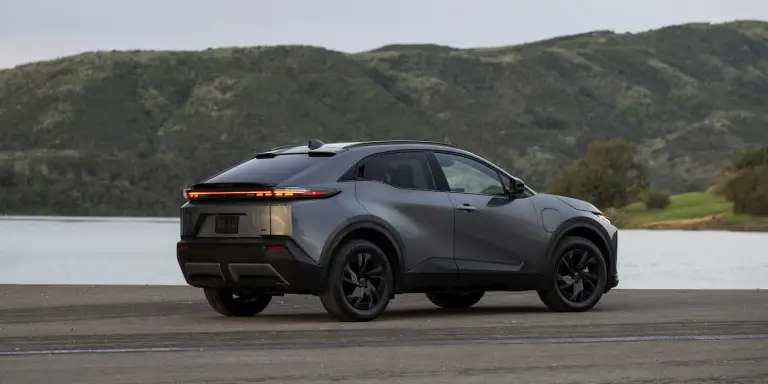
This aligns with Toyota’s recent launches, including the updated bZ4X, C-HR EV, and the upcoming three-row electric SUV.
Market Context: Moving Against the Trend
What makes this move particularly interesting is the timing.
Several major automakers in the US — including Ford, GM, and Stellantis — have recently slowed or adjusted their EV plans due to:
- Slower-than-expected demand growth
- Cost pressures
- Infrastructure challenges
Toyota, on the other hand, appears to be accelerating investment.
From a strategic perspective, this could be:
- A calculated bet on long-term EV demand
- An attempt to catch up after a slower initial rollout
- A move to secure manufacturing capacity before demand rebounds
Strategic Assessment: Smart Expansion or Late Catch-Up?
Toyota’s approach feels more deliberate than aggressive.
Instead of rapidly scaling multiple EVs at once, the company is:
- Expanding production gradually
- Leveraging existing popular models (SUVs)
- Building flexibility into its manufacturing network
This reduces risk but may also delay its ability to compete with more EV-focused brands in the short term.
Final Verdict: A Clear Step Forward, But Still Measured
Toyota’s $1 billion investment shows a clear shift toward electrification in the US, particularly in the SUV segment where demand remains strongest.
While the company is still not moving as aggressively as some competitors, it is no longer standing still.
Clear opinion:
Toyota is finally committing more seriously to EV production in the US, but it is doing so on its own terms — carefully, and with a focus on scalability rather than speed. If demand continues to grow, this measured approach could pay off. But if the market accelerates faster than expected, Toyota may still find itself playing catch-up.