
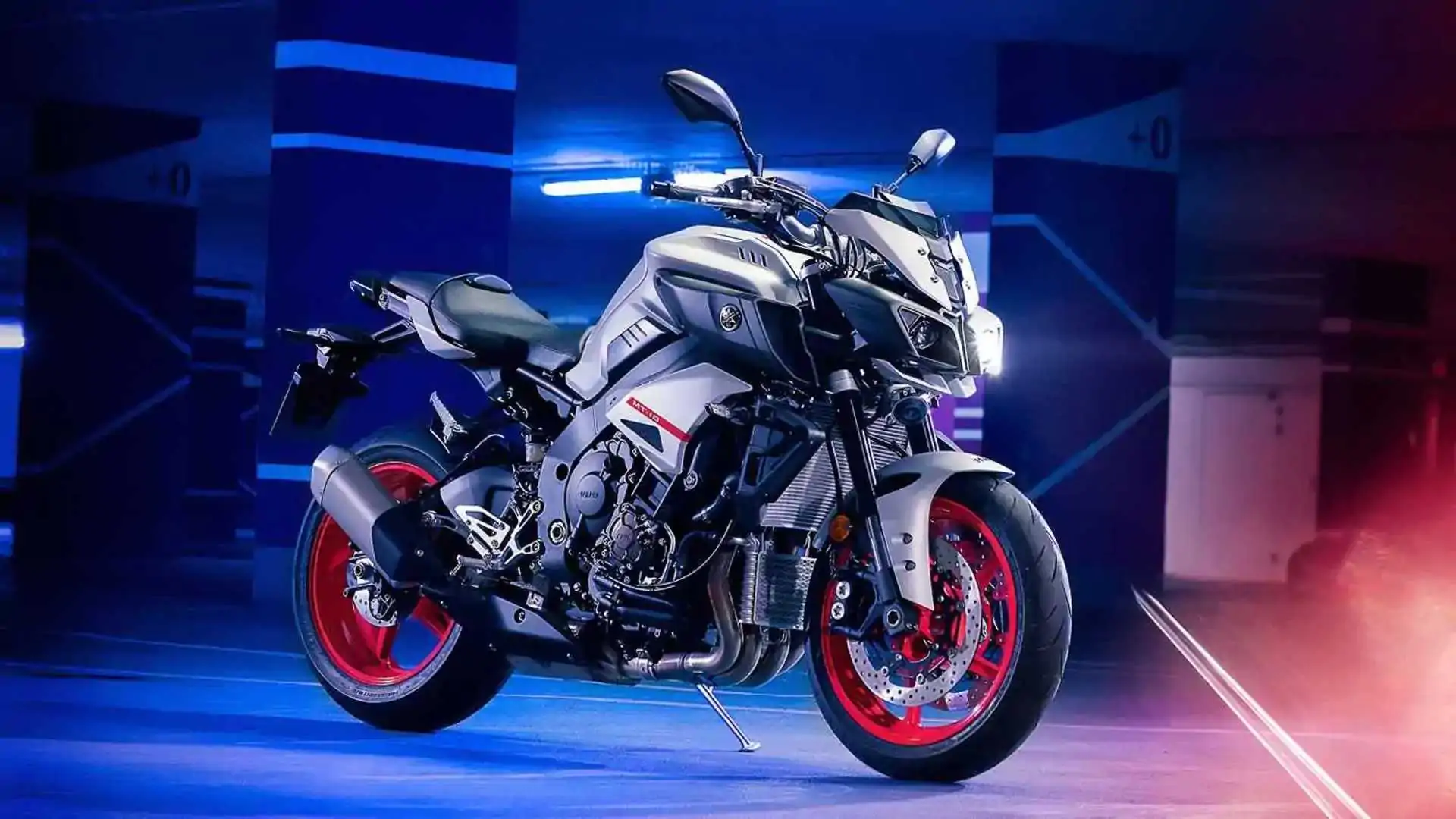
The Yamaha MT-10 is officially set to return to the European lineup, this time updated to meet the stricter Euro5+ emissions regulations. Confirmation from Yamaha Motor Europe signals that the model has not been discontinued, but rather delayed due to the increasing complexity of regulatory compliance.
This comeback is more than a routine update. It reflects broader changes in the motorcycle industry, where manufacturers must balance performance, cost, and environmental standards—especially for high-performance engines like the MT-10’s CP4.
Why the MT-10 Was Delayed
The main reason behind the MT-10’s temporary absence is Euro5+, an evolution of the Euro5 standard introduced in 2020.
Unlike previous regulations, Euro5+ does not only focus on emissions when the bike is new. It requires manufacturers to ensure that emissions remain within limits throughout the motorcycle’s lifespan. This includes:
- Monitoring catalyst degradation over time
- Ensuring long-term emissions stability
- Adding more complex onboard diagnostics
For a performance-oriented engine like the CP4 inline-four, meeting these requirements is significantly more challenging and costly.
The CP4 Engine: Core Identity of the MT-10
The MT-10 stands out because of its engine, derived from the R1 superbike platform.
Key Characteristics
- 998cc crossplane inline-four engine
- Around 163 hp in previous versions
- Strong midrange torque delivery
- Distinctive firing order that creates a unique sound and feel
This engine gives the MT-10 a raw, aggressive character that differs from smoother inline-four competitors. It feels closer to a superbike than a traditional naked bike.
With the R1 becoming track-only from 2025, the MT-10 is expected to remain the only road-going Yamaha model using this CP4 engine. That makes its return even more important from both a branding and engineering perspective.
Yamaha’s Strategic Priorities
From a business standpoint, Yamaha’s decision to delay the MT-10 update is logical.
The company has focused on engines with broader applications:
- CP2 (689cc parallel twin): used in high-volume models like MT-07 and Tenere 700
- CP3 (890cc triple): used in MT-09 and Tracer 9
These platforms:
- Sell in larger numbers
- Are easier to adapt to emissions standards
- Offer better return on investment
In contrast, the CP4 engine:
- Is more complex and expensive to homologate
- Is used in fewer models
- Targets a niche segment
This explains why the MT-10 was not Yamaha’s first priority for Euro5+ updates.
Positioning Against Competitors
The MT-10 occupies a unique space in the market, sitting between mainstream Japanese naked bikes and premium European super-nakeds.
Japanese Rivals
- Honda CB1000 Hornet
- Suzuki GSX-S1000
- Kawasaki Z1100 (expected 2026)
These models typically offer:
- Strong performance
- Competitive pricing
- High reliability
Estimated price range: €10,000 – €13,000
European Super-Naked Segment
- Ducati Streetfighter V4
- KTM 1290 Super Duke R
- Aprilia Tuono V4
These bikes focus on:
- Maximum performance
- Advanced electronics
- Premium components
Estimated price range: €18,000 – €25,000+
MT-10’s Position
The MT-10 bridges the gap:
- More character and performance than most Japanese rivals
- More affordable than European flagship models
- Offers a superbike-derived engine in a naked format
Expected pricing for the updated version:
- Standard: around €14,000 – €15,000
- SP version: around €17,000 – €18,000
This positioning makes it one of the strongest value options for riders seeking high performance without entering premium pricing territory.
Expected Updates for the New Version
While Yamaha has not released full technical details, several changes are likely:
Expected Improvements
- Updated exhaust and catalytic system for Euro5+ compliance
- Revised ECU tuning for emissions and smoother delivery
- Possible minor adjustments to power output
- Improved electronics calibration
Likely to Remain Unchanged
- CP4 engine architecture
- Aggressive styling design
- Focus on raw riding experience
Yamaha is unlikely to alter the core identity of the MT-10, as its appeal lies in its distinctive engine character.
Implications for the Future
The MT-10’s return suggests that Yamaha still sees value in high-character engines, even under stricter regulations.
At the same time, comments about a future R1 indicate that Yamaha is moving away from simple compliance updates. Any future flagship models will likely require significant improvements in performance and technology rather than incremental changes.
Final Evaluation
The Yamaha MT-10 remains a compelling option, but it is clearly aimed at a specific type of rider.
It is best suited for those who:
- Want a superbike-derived engine in a naked bike
- Appreciate mechanical character and aggressive performance
- Seek strong value compared to European alternatives
It may not appeal to riders who prioritize:
- Smoothness and comfort over raw performance
- Fuel efficiency and practicality
- The latest cutting-edge electronics
Conclusion
The return of the MT-10 under Euro5+ regulations shows that performance-oriented motorcycles still have a place in an increasingly regulated market.
If Yamaha manages to preserve the engine’s character while meeting stricter standards, the MT-10 could remain one of the most distinctive and engaging super-naked bikes available.
In a segment that is becoming more refined and homogenized, the MT-10’s biggest strength may continue to be exactly what makes it different.


