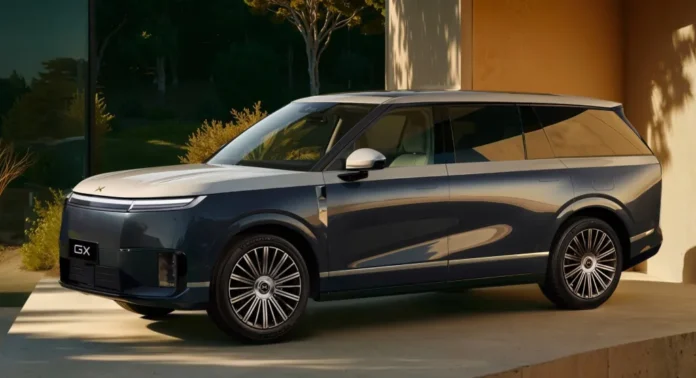
Porsche is pushing deeper into the high-performance EV space, and its latest move might be its boldest yet: an all-electric version of the Porsche Cayenne Coupe. It won’t replace the existing gas (ICE) or hybrid models—it will sit alongside them, offering buyers a fully electric alternative wrapped in the same sloping, coupe-style body.
And on paper, it’s nothing short of outrageous.
The headline numbers read more like a hypercar than a family SUV. The top-spec Turbo Coupe Electric delivers up to 850 kW (1,139 hp) and 1,106 lb-ft of torque, launching from 0–60 mph in just 2.4 seconds. That’s firmly in supercar territory, rivaling vehicles like the Tesla Model X Plaid and even encroaching on performance benchmarks set by low-slung sports cars.
But numbers alone don’t tell the full story.
Performance Meets Practicality
Across the lineup—Cayenne Coupe, S Coupe, and Turbo Coupe—Porsche is clearly aiming to blend extreme performance with everyday usability. Even the base model pushes out 435 hp, while the S jumps to 657 hp, making “entry-level” feel like a misnomer.
More importantly, this isn’t a stripped-down performance machine. You still get:
- Up to 7,716 lb towing capacity
- Optional off-road package for better approach angles
- Rear-axle steering for tighter handling
- A practical interior with configurable rear seating
- Both a front trunk (frunk) and rear cargo space
That combination is key. Unlike many high-performance EVs that sacrifice utility, Porsche is trying to keep the Cayenne’s identity intact.
Still, the coupe styling does come with trade-offs. The roofline is 24 mm lower than the standard SUV, which improves aerodynamics (drag coefficient of 0.23 vs. 0.25) but may slightly reduce rear headroom and cargo flexibility.

Charging and Battery: Fast, But Conditional
The Cayenne Coupe Electric runs on an 800-volt architecture, similar to the Porsche Taycan, which allows for extremely fast charging. Under ideal conditions, the 113 kWh battery can go from 10% to 80% in under 16 minutes.
That sounds incredible—and it is—but there’s a catch.
You’ll need access to a 400 kW-capable charging station to achieve those speeds, which are still relatively rare. In real-world use, charging times will likely be longer for most drivers.
On the plus side, Porsche is hedging its bets on charging compatibility. The vehicle includes:
- A built-in NACS port (used by Tesla’s network)
- A J1772 AC port for Level 2 charging
- A CCS adapter included as standard
This flexibility is a practical win, especially as charging standards continue to evolve.
Driving Tech: Where Porsche Still Stands Out
Beyond raw power, Porsche is leaning heavily on chassis tech to differentiate this SUV.
Higher trims (S and Turbo) get:
- Active Ride suspension (electro-hydraulic system for stability and comfort)
- Porsche Torque Vectoring Plus (for sharper cornering control)
These systems aren’t just about performance—they improve ride quality and handling in everyday driving, making the car feel smaller and more agile than its size suggests.
Rear-axle steering, available across all trims, further enhances maneuverability—especially useful in urban environments.

Pricing and Market Position
This is firmly a luxury product.
- Base Cayenne Coupe Electric: $113,800
- S Coupe: $131,200
- Turbo Coupe: $168,000
That places it directly against premium electric SUVs like the BMW iX M60 and the Mercedes-Benz EQE SUV, while overlapping with ultra-high-performance options like the Tesla Model X Plaid.
But Porsche isn’t trying to win on price. It’s betting on brand, driving dynamics, and design.
Pros and Cons
Pros
- Supercar-level acceleration in an SUV format
- Advanced chassis tech improves real-world driving feel
- Ultra-fast charging capability (under ideal conditions)
- Strong balance of performance and practicality
Cons
- Charging speeds depend heavily on infrastructure availability
- Coupe design sacrifices some practicality
- Extremely high price point
- Likely overpowered for typical daily use
The Bigger Picture
The Cayenne Coupe Electric isn’t just another EV—it’s a statement. Porsche is proving that electrification doesn’t mean dialing things back. If anything, it’s doubling down on performance.
But there’s a legitimate question here: how much performance is too much?
For most drivers, 1,100+ horsepower in a family SUV is unnecessary. It’s impressive, yes—but also excessive. The real value lies in how well the car balances that performance with comfort, usability, and everyday practicality.
Final Verdict
The Porsche Cayenne Coupe Electric is a technological powerhouse that pushes the limits of what an SUV can be. It delivers astonishing performance, cutting-edge engineering, and the kind of driving refinement Porsche is known for.
But it’s also a product of extremes—priced accordingly, and arguably overbuilt for real-world needs.
If you want the fastest, most advanced luxury SUV money can buy, this is it.
If you’re looking for rational value, it’s harder to justify.
Either way, Porsche isn’t just entering the electric SUV race—it’s trying to redefine it.