
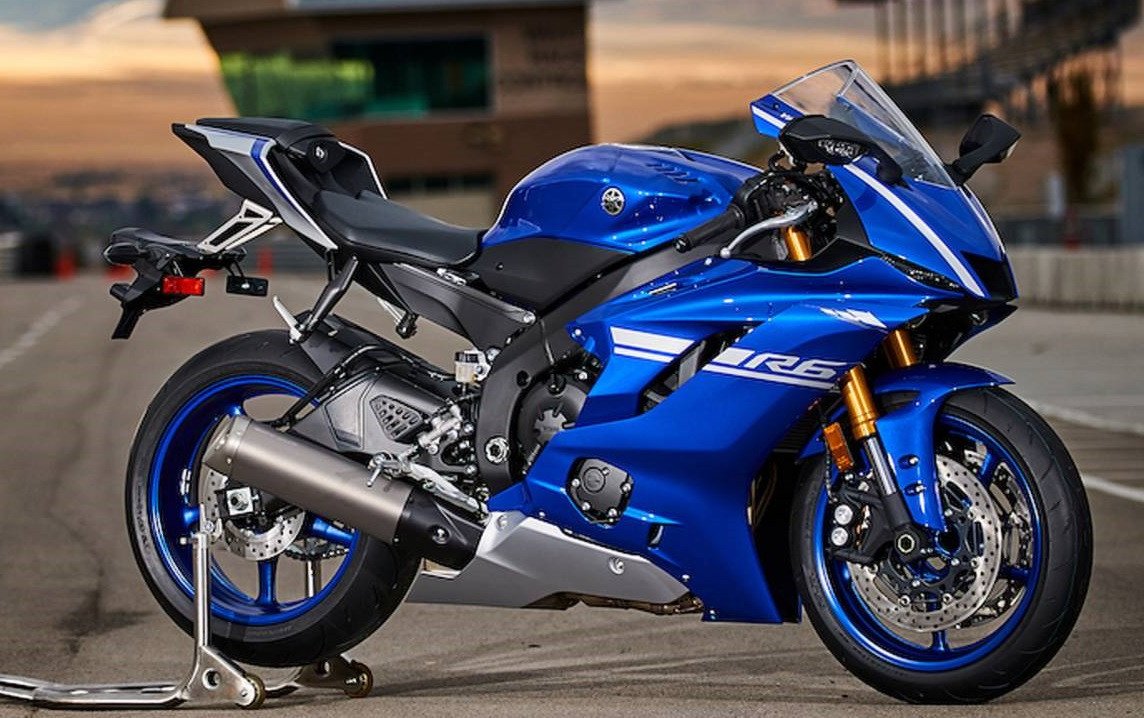
The Yamaha YZF-R6 may have disappeared from European roads after Euro5 regulations, but its story clearly isn’t over. While Yamaha itself has shifted focus to newer platforms like the Yamaha R9, Dutch racing specialist Ten Kate Racing has taken a very different approach — rebuilding the R6 into something that arguably should have existed.
What they created is not just a tuned bike. It’s a technical statement: a crossplane-crank R6 that explores how Yamaha’s signature engine philosophy from the R1 would translate into a smaller, high-revving supersport.
Why This R6 Is So Different
At first glance, the changes might sound simple: swap in a crossplane crankshaft. In reality, this required a complete engine redesign.
A standard inline-four like the R6 uses a flat-plane crankshaft, firing evenly every 180 degrees. This creates smooth, predictable power delivery and excellent balance. It’s efficient and proven — but not necessarily the most engaging in terms of traction feel.
The crossplane concept, first popularized on the Yamaha YZF-R1, changes that completely. By offsetting crankpins at 90 degrees, it creates uneven firing intervals (270°–180°–90°–180°). This mimics the feel of a V4 engine and gives the rear tire brief recovery moments between power pulses.
In simple terms, it trades smoothness for grip and feedback.
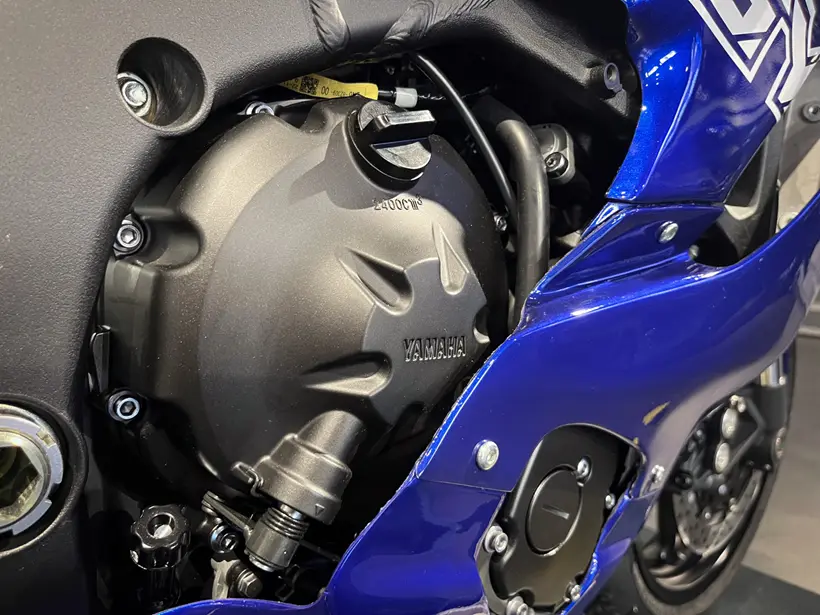
The Engineering Challenge (and How Ten Kate Solved It)
Here’s where things get interesting.
The R1 solves the vibration issues of a crossplane crank using a balancer shaft. But the smaller R6 engine doesn’t have space for that. Instead, Ten Kate had to engineer a workaround.
They integrated tungsten counterweights directly into the crankshaft — a solution that required extensive simulation, multiple prototypes, and real-world testing. On top of that, they redesigned camshafts and recalibrated the ECU to match the new firing order, including ignition and fuel mapping.
This isn’t a bolt-on upgrade. It’s essentially a ground-up reengineering of the engine’s core behavior.
The result is a bike producing around 126 hp and 47.6 lb-ft of torque, revving up to 15,800 rpm. On paper, those numbers aren’t dramatically higher than a stock R6 — but that’s not the point.
The real goal is how the power is delivered.
How It Compares to Standard R6 and R1
Compared to a stock R6:
- Slightly higher peak performance
- Much more character in power delivery
- Improved traction feel, especially on corner exit
Compared to the R1:
- Less outright power
- Lighter and more agile
- Similar crossplane “feel” but in a high-revving 600cc format
From a riding perspective, this could be the missing link between traditional supersports and modern superbikes. A lighter bike with more communicative throttle response is something many riders have wanted for years — but the market moved on before manufacturers could fully explore it.
Price: Where Reality Kicks In
This one-off machine is priced at €49,900 (before VAT), which puts it well above almost anything in the supersport category.
For context:
- A used R6 track bike typically costs €10,000–€15,000
- A new liter bike like the R1 or competitors sits around €20,000–€25,000
- Even exotic machines in this space rarely approach this level
At over €50,000 total, this R6 is no longer competing with production motorcycles. It’s closer to a collector piece or a prototype-level engineering showcase.
Why Yamaha Never Built This
Looking at this project, the obvious question is: why didn’t Yamaha do it themselves?
The answer is simple — market demand.
The 600cc supersport segment has been declining for years. Emissions regulations like Euro5 accelerated that decline. Investing heavily in a niche concept like a crossplane R6 would have been difficult to justify commercially.
Ten Kate, on the other hand, isn’t constrained by mass production economics. This project is as much about technical exploration as it is about the final product.
Personal Perspective
What I find most interesting is that this bike feels like a “what if” scenario. What if the 600cc class had remained strong? What if manufacturers had continued pushing innovation instead of shifting focus to larger or more practical bikes?
This R6 answers that question — at least partially.
It shows that there was still room for evolution in the segment. Not in terms of raw power, but in how that power connects to the rider.
Final Verdict
The Ten Kate crossplane R6 is not a practical purchase, nor was it meant to be. It’s a technical experiment that demonstrates how far a supersport platform can be pushed when engineering takes priority over cost.
Clear opinion:
As a product, it’s too expensive and too niche. But as an idea, it’s brilliant — a reminder that the 600cc supersport category still had untapped potential before the market moved on.


