Tesla has quietly changed the way it sells driver-assistance features in Europe — and the Netherlands is now the first test market.
Buyers ordering a new Tesla Model 3 or Tesla Model Y in the Netherlands can no longer select Basic Autopilot. Instead, Tesla now offers only Full Self-Driving (Supervised), either as a €99-per-month subscription, a €7,500 one-time purchase, or a feature to add later.
In practice, that means Dutch buyers no longer receive Tesla’s traditional lane-centering and Autosteer functions as part of the standard vehicle package.
That is a significant shift.
For years, Basic Autopilot was one of Tesla’s strongest selling points. Even without paying for higher-end autonomous driving packages, buyers still received active lane-keeping, adaptive cruise control, and highway steering assistance integrated into the car. The system helped define Tesla’s reputation for software-driven driving technology.
Now Tesla appears to be turning those features into a subscription product.
The move mirrors what the company already implemented in North America earlier this year. In January, Tesla removed standard Autopilot from new US and Canadian orders, leaving buyers with only Traffic-Aware Cruise Control unless they subscribed to FSD. In other words, even basic lane-centering became paywalled.
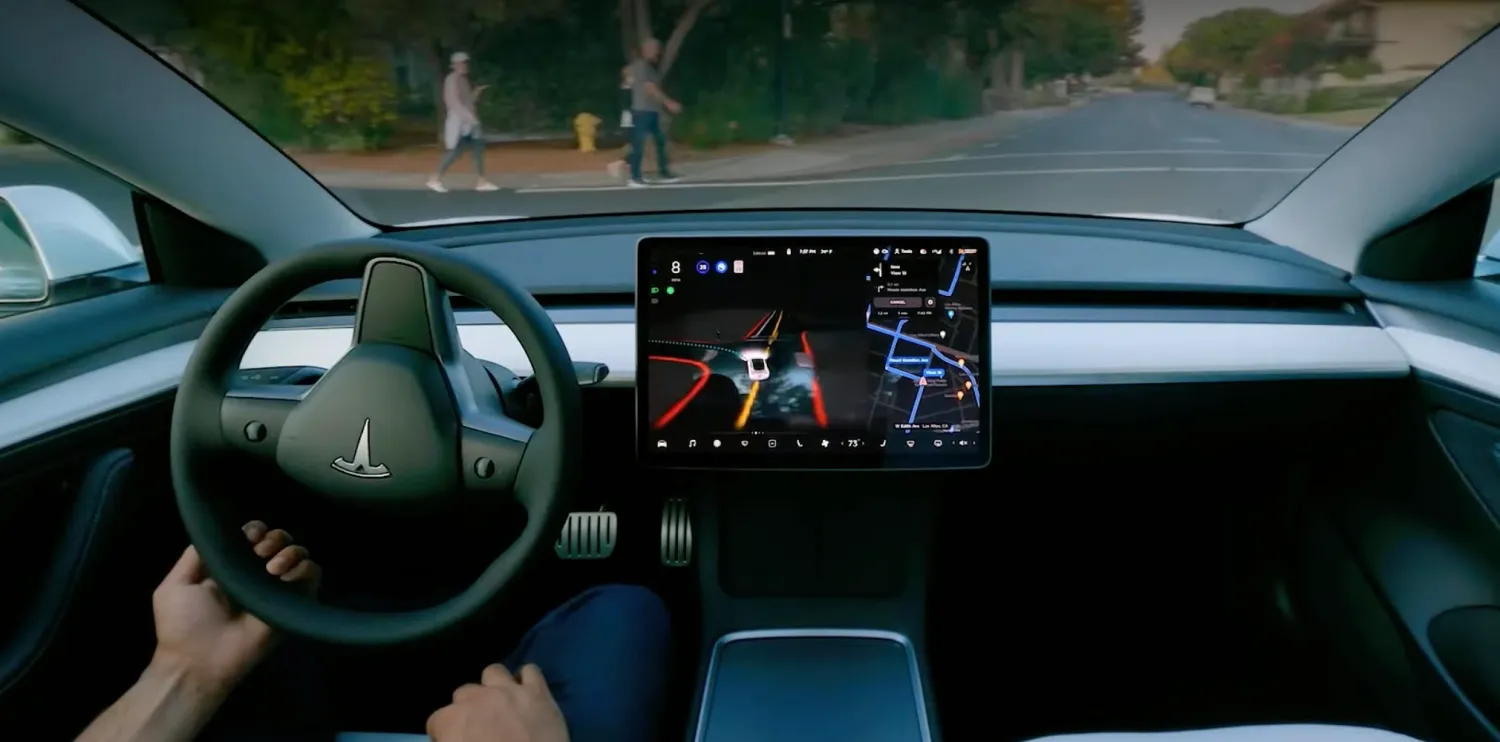
The Netherlands is now the first European market following the same strategy.
The timing is unlikely to be accidental.
Last month, Dutch regulators became the first in Europe to approve Tesla’s FSD Supervised system under UN R-171 regulations, allowing the company to begin broader deployment of its advanced driver-assistance software. Since mid-April, Tesla has been rolling out FSD access to Dutch owners.
With regulatory approval now secured, Tesla appears to be using the Netherlands as an early experiment for a subscription-first software business model in Europe.
The strategy itself is straightforward. Remove the free middle tier, create a noticeable functionality gap, and encourage recurring subscriptions instead of one-time purchases.
From a business perspective, the logic is obvious.
Recurring software revenue is far more attractive than one-time hardware sales. Automakers increasingly want to monetize vehicles after purchase through subscriptions, upgrades, and connected services. Tesla has been one of the most aggressive companies pursuing that model.
But the change may be harder to justify from a consumer perspective — especially in Europe.
Under the EU’s GSR2 safety regulations, all new vehicles sold since July 2024 are already required to include emergency lane-keeping systems. Most mainstream automakers go beyond those minimum requirements by offering active lane-centering and highway steering assistance as standard equipment.
That includes brands like Toyota, Hyundai Motor Company, and Volkswagen.
For example, a Volkswagen ID.4 or Hyundai Ioniq 5 at a similar price point includes lane-centering assistance without requiring a monthly subscription. Tesla, by contrast, now charges Dutch buyers €99 per month for functionality many rivals treat as standard.
That comparison matters because Tesla’s software advantage is no longer as overwhelming as it once was.
Several competitors now offer polished driver-assistance systems, modern EV platforms, and increasingly competitive charging ecosystems. Tesla still leads in software integration and over-the-air updates, but the company is also asking customers to pay more continuously for features that competitors bundle into the purchase price.
At the same time, Tesla’s approach does have advantages.
Subscriptions lower upfront costs for buyers who may only want advanced driving assistance occasionally. Drivers can activate FSD for road trips or temporary use without paying thousands of euros permanently. Tesla can also continuously improve the system through software updates, potentially adding more value over time.
Still, the optics are complicated.
A base Model 3 in the Netherlands starts at roughly €36,990, yet buyers now receive only basic safety intervention systems unless they subscribe. For many consumers, paying a recurring monthly fee simply to restore features previously included for free may feel less like innovation and more like feature removal.
There are also signs the strategy could expand quickly across Europe. Tesla has already set a May 21 deadline for one-time FSD purchases in several European countries, suggesting a broader transition toward subscriptions may be imminent as regulatory approvals spread.
The Netherlands may simply be the beginning.
Tesla’s shift highlights a larger transformation happening across the automotive industry: cars are increasingly becoming software platforms with recurring revenue models attached. The question is whether consumers will accept paying monthly for features that many competitors already include by default.
And in Europe’s increasingly competitive EV market, that may become a harder sell than it was a few years ago.