At its CES 2026 keynote in Las Vegas, Nvidia laid out a clearer vision of where it believes autonomous driving technology is heading. As expected, CEO Jensen Huang announced a wave of updates focused on self-driving and advanced driver-assistance systems (ADAS), with the most notable being a new family of open-source models called Alpamayo.
The central message of Nvidia’s presentation was a conceptual shift: autonomous systems must move beyond simply perceiving their surroundings to actively reasoning about them. According to Nvidia, Alpamayo is designed to help vehicles interpret complex driving scenarios, anticipate outcomes, and make decisions in a more human-like way.
From Seeing to Understanding
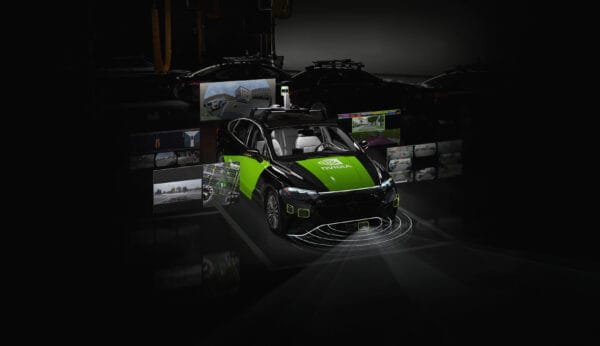
Until now, much of autonomous driving development has focused on perception—detecting lanes, pedestrians, vehicles, and obstacles using cameras, radar, and lidar. Nvidia argues that this approach alone is no longer sufficient, especially in dense urban environments where ambiguity is the norm.
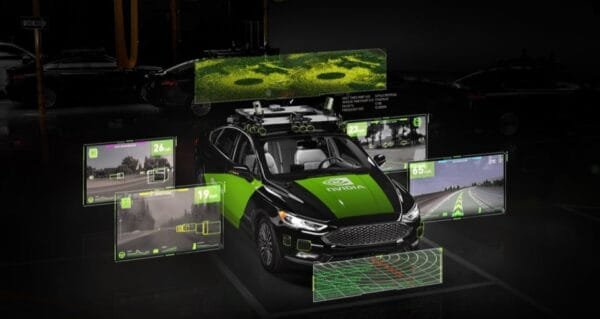
Alpamayo is positioned as a reasoning layer that sits on top of perception systems. Instead of only identifying what is present on the road, the models aim to evaluate intent, context, and cause-and-effect relationships—for example, predicting whether a pedestrian standing near a curb is likely to cross, or how another driver might react in an unprotected left turn.
Nvidia says the Alpamayo family will be integrated into its existing DRIVE autonomous platform and used across both full self-driving development and advanced driver-assistance features such as automated lane changes, intersection handling, and collision avoidance.
Open-Source Strategy
One of the more notable aspects of the announcement is Nvidia’s decision to make Alpamayo open source. The company says this is intended to accelerate industry-wide adoption and allow automakers, suppliers, and researchers to adapt the models to their own systems and regulatory environments.
This approach contrasts with more closed strategies used by some autonomous driving developers and reflects Nvidia’s broader role as an enabling platform rather than a vehicle manufacturer. By providing foundational models, Nvidia aims to position itself at the center of a growing ecosystem of automotive AI development.
Industry Context
The announcement comes as the autonomous driving sector faces renewed scrutiny. Timelines for fully self-driving vehicles have slipped repeatedly, and many automakers are now prioritizing incremental ADAS improvements over near-term autonomy promises. Nvidia acknowledged this shift during the keynote, framing Alpamayo as technology that can improve safety and reliability today, while also supporting longer-term autonomy goals.
Nvidia also highlighted ongoing partnerships with global automakers and suppliers, though it did not announce specific new vehicle launches tied directly to Alpamayo during the keynote.
A Broader AI Push
Alpamayo fits into Nvidia’s wider strategy of expanding AI models beyond data centers into real-world, safety-critical applications. The company emphasized that advances in computing power, simulation, and AI training are converging, making higher-level reasoning in vehicles increasingly feasible.
Perspective
From a neutral analytical standpoint, Nvidia’s Alpamayo announcement represents an evolution rather than a sudden breakthrough. Moving from perception to reasoning addresses a well-known limitation in current autonomous systems, but translating that capability into consistently reliable real-world performance remains a major challenge. By open-sourcing the models and focusing on near-term ADAS use cases, Nvidia appears to be hedging its bets—supporting practical improvements today while keeping its long-term autonomy ambitions intact.