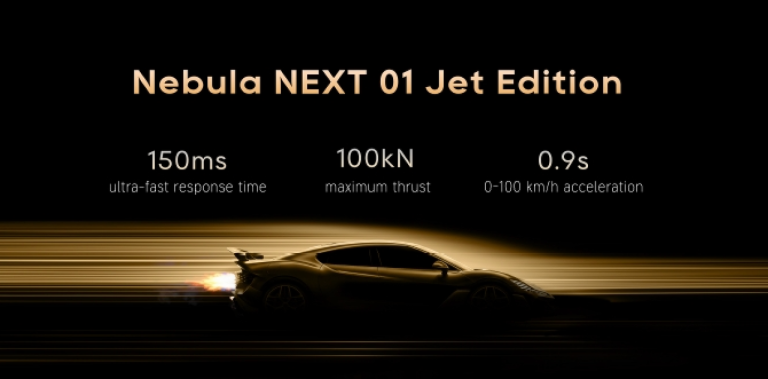
Dreame Technology, best known for robot vacuums, is making another unexpected leap—this time into electric supercars. Its latest concept, the Dreame Nebula NEXT 01 Jet Edition, comes with a headline claim that sounds almost unreal: 0–100 km/h (0–62 mph) in just 0.9 seconds.
That number alone raises an immediate question—is it even physically possible?
Why 0.9 Seconds Is So Hard to Believe
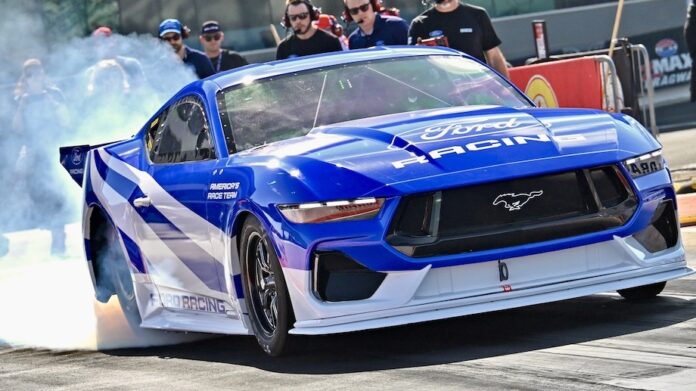
In simple terms, most high-performance cars today are not limited by power—they’re limited by grip.
Even the fastest EVs, like the Rimac Nevera, are already pushing the limits of what tires can handle. When a car accelerates, the only thing connecting it to the ground is rubber. If you add more power than the tires can transmit, you don’t go faster—you just spin.
That’s why shaving even a tenth of a second off acceleration times is extremely difficult. Dropping below one second is another level entirely.
Dreame’s Solution: Skip Traction Altogether
Instead of trying to improve tire grip, Dreame is taking a more unconventional route—literally adding rockets.
The Jet Edition concept uses dual solid rocket boosters capable of producing around 100 kilonewtons of thrust. Unlike electric motors, which rely on the wheels to push against the ground, rockets generate thrust independently of traction.
In practical terms, this means the car doesn’t need to rely entirely on tire grip to accelerate.
It’s an extreme solution—but one that introduces new complications.
Performance vs Practicality
On paper, rocket-assisted acceleration could make sub-one-second sprints possible. But in the real world, it raises several challenges:
- Fueling: Solid rocket boosters require specialized fuel, far less convenient than charging a battery
- Emissions: The system contradicts the zero-emission premise of EVs
- Control: Managing thrust safely at launch would be extremely complex
- Regulation: Road legality for such a system is highly questionable
In other words, it may work as a demonstration—but scaling it into a usable product is another matter entirely.
Built on an Existing EV Platform
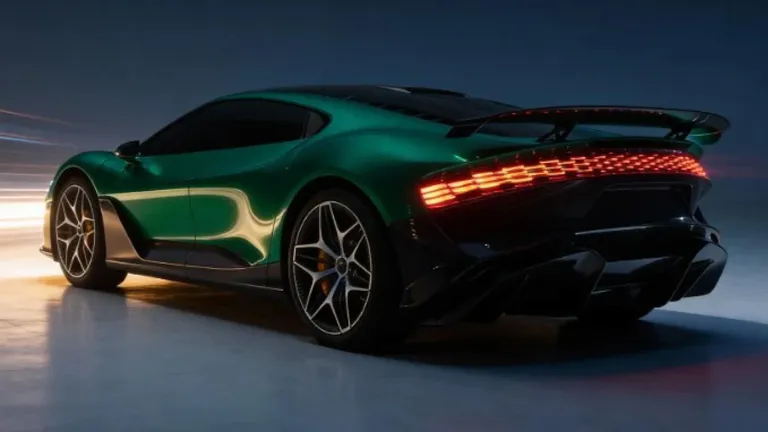
The Jet Edition appears to be an extension of Dreame’s earlier concept, the Nebula 1—an electric supercar with around 1,876 horsepower first shown at CES.
The addition of rocket boosters transforms it from a high-performance EV into something closer to an experimental vehicle.
Dreame says it aims to bring the car to production by 2027 and is reportedly working with BNP Paribas to build a factory near Berlin. However, detailed specifications remain limited, and the company has yet to provide clear answers on several technical aspects.
A Pattern Emerging in the EV Industry
While Dreame’s claims sound extreme, they’re not entirely out of context.
Chinese tech companies have increasingly entered the EV space with ambitious projects, as seen with Xiaomi. The pace of development has been fast, and in some cases, surprisingly effective.
At the same time, bold claims are not unique to newcomers.
A Familiar Comparison: Tesla’s Roadster
Dreame’s approach echoes earlier promises from Tesla regarding its next-generation Tesla Roadster. Tesla proposed a “SpaceX package” featuring compressed-air thrusters to achieve extreme acceleration figures.
The difference lies in execution.
Tesla’s system, if realized, would rely on compressed air—simpler and more manageable than rocket fuel. However, the Roadster itself has faced repeated delays since its 2017 unveiling, and many of its more ambitious claims remain unproven.
Dreame, at least for now, has moved faster in presenting a concept—but still faces similar credibility questions.
Pros and Cons
Pros
- Radical approach to overcoming traction limits
- Potentially record-breaking acceleration
- Signals continued innovation in EV performance
- Expands competition beyond traditional automakers
Cons
- Questionable real-world feasibility
- Complex fueling and maintenance requirements
- Compromises the “clean” nature of electric vehicles
- Limited transparency and technical detail so far
The Bigger Picture
The Nebula NEXT 01 Jet Edition is less about a production-ready car and more about pushing boundaries—both technically and conceptually.
It highlights a broader shift in the EV industry, where performance innovation is no longer confined to traditional automakers. New entrants are experimenting with unconventional ideas, even if not all of them are practical.
Final Verdict
Dreame’s rocket-assisted EV concept is undeniably ambitious, and in theory, it could achieve acceleration figures that redefine what cars are capable of.
But ambition alone doesn’t guarantee viability.
Until the company demonstrates a working, repeatable system under real-world conditions, the Nebula Jet Edition remains closer to a technological experiment than a credible production vehicle. It’s a bold vision—but one that still has to prove it can move from spectacle to substance.