Nuro has received approval from the California Department of Motor Vehicles to test fully driverless Lucid Gravity robotaxis on public roads, marking a major step toward the launch of Uber’s planned autonomous ride service in the Bay Area.
The updated permit allows Nuro to operate the vehicles without a human safety driver in parts of Santa Clara and San Mateo counties at speeds of up to 45 mph, during both daytime and nighttime conditions. Until now, the company’s testing program in California still required a human operator behind the wheel.
The approval significantly expands Nuro’s real-world testing capabilities as the company prepares for commercial robotaxi operations expected to begin later this year.
Since April, Uber employees in the Bay Area have already been able to request rides in Lucid Gravity robotaxis through the Uber app, though those vehicles have operated with safety drivers present. The next phase removes that safeguard during testing, allowing Nuro to evaluate how its autonomous system performs entirely on its own in live traffic conditions.
The Lucid Gravity SUVs are equipped with a combination of high-resolution cameras, radar, and solid-state lidar sensors. The vehicles run on Nuro’s autonomous driving software stack powered by NVIDIA’s Drive AGX Thor computing platform, which processes large amounts of sensor data in real time to navigate traffic, pedestrians, and road conditions.
In practical terms, this permit moves the program from supervised testing closer to genuine autonomous operation.
The broader partnership behind the project has also grown rapidly. When Nuro, Uber, and Lucid Motors first introduced the robotaxi initiative at CES earlier this year, the agreement involved 20,000 vehicles. Since then, Uber has expanded its investment in Lucid to $500 million and increased the planned fleet size to at least 35,000 autonomous SUVs.
Lucid has already delivered dozens of engineering vehicles to the partnership for testing across multiple US cities.
Still, the new permit does not mean public driverless rides are immediately ready. California’s regulatory system separates autonomous vehicle testing from commercial deployment. Before Uber can begin offering paid rides to the public without safety drivers, Nuro still needs additional approvals from both the DMV and the California Public Utilities Commission.

Those permits have not yet been granted.
That leaves the Nuro-Uber-Lucid alliance in a different position from Waymo, which already operates a large-scale commercial robotaxi service in San Francisco and several other cities. Waymo currently completes roughly half a million paid autonomous rides each week and has spent years refining both its technology and regulatory relationships.
Competition in the autonomous ride-hailing market is also intensifying. Zoox, owned by Amazon, is preparing to launch its own paid robotaxi service in San Francisco in 2026, while Tesla continues pushing toward autonomous deployment through its Full Self-Driving platform.
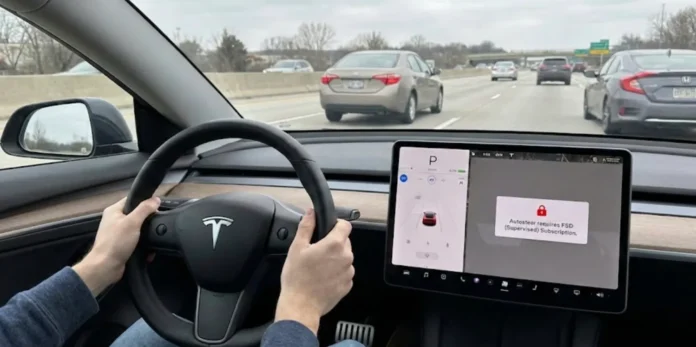
However, Tesla still lacks approval in California for driverless testing without a human safety operator, highlighting how difficult the regulatory path remains even for major automakers.
For Nuro, the latest permit represents an important validation point. It shows California regulators are willing to allow more advanced testing under controlled conditions, particularly for companies that have gradually expanded their operational scope rather than attempting rapid public deployment.
At the same time, the real challenge is still ahead.
Testing driverless vehicles is one thing. Scaling a reliable commercial robotaxi network that can operate safely, consistently, and profitably in dense urban environments is something entirely different.
Conclusion:
Nuro’s new California permit is a meaningful milestone for the company’s partnership with Uber and Lucid, moving the program closer to fully autonomous ride-hailing operations. But while the approval advances driverless testing, the broader robotaxi race remains wide open, with regulatory approval, operational reliability, and large-scale deployment still separating testing programs from truly mainstream autonomous transportation.