
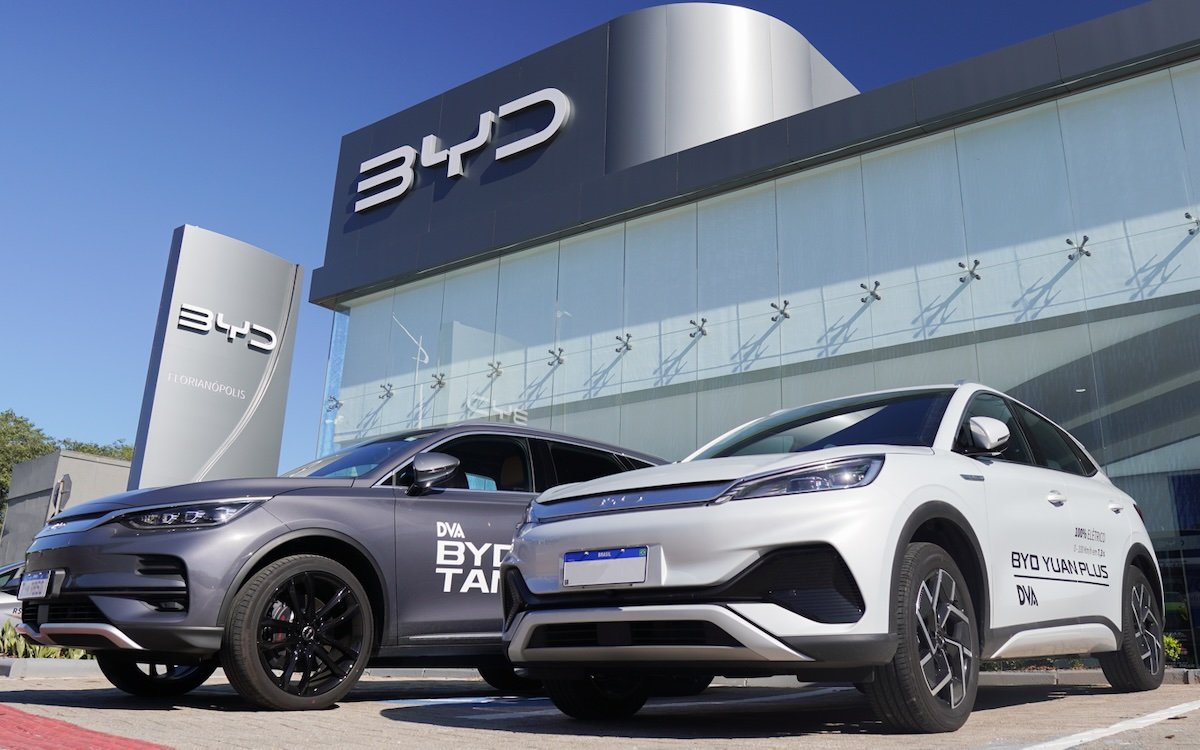
BYD is preparing a major entry into Canada, moving quickly to establish a physical retail network just months after a key policy shift made the market accessible again. The company plans to open around 20 branded dealerships within its first year, signaling a serious commitment rather than a cautious trial.
From a strategic perspective, this is one of the most aggressive expansions BYD has attempted in a developed Western market.
Why Now? The Tariff Shift Changed Everything
The timing is not accidental.
Canada recently reduced tariffs on Chinese-built EVs from 100% to 6.1%, effectively reopening the market. However, the agreement comes with strict limits:
- 49,000 EV import cap in year one
- Additional 24,500 units in a second phase
- Gradual increase to 70,000 units by 2030
This creates a controlled entry environment — open, but tightly regulated.
In exchange, China lowered tariffs on Canadian agricultural exports, while requiring Chinese automakers to establish local joint ventures within three years.
Retail Strategy: Building a National Footprint
BYD is not relying on third-party distribution. Instead, it is building a dedicated dealership network, similar to traditional automakers.
Initial focus:
- Greater Toronto Area (GTA)
- Expansion planned for:
- Vancouver
- Montreal
- Calgary
This covers Canada’s largest urban markets and aligns with where EV adoption is highest.
Interestingly, BYD is working with a local automotive consultancy to secure locations, while also scouting independently — suggesting urgency in execution.
The Big Question: Can 20 Dealerships Work Under a Sales Cap?
This is where things get complicated.
The 49,000-unit cap represents less than 3% of Canada’s annual auto market — and that supply will likely be shared across multiple brands, including other Chinese entrants like Chery.
From a business standpoint:
- 20 dealerships could be overbuilt relative to available inventory
- Sales per location may be limited in the early years
- Profitability could depend more on long-term positioning than short-term volume
In other words, BYD appears to be investing ahead of demand, betting on future market expansion rather than immediate returns.
Market Conditions: A Weak but Open Opportunity
BYD is entering Canada at a moment of transition.
- EV sales dropped about 25% in 2025
- Federal incentives were reduced
- Economic uncertainty slowed adoption
At the same time:
- Tesla’s sales fell sharply (over 60%)
- GM, Hyundai, and Kia gained market share
This creates a rare situation:
- Demand is softer
- Competition is shifting
- Brand loyalty is less stable
For a new entrant like BYD, this could be an opportunity to establish a foothold while the market resets.
Product Strategy: Affordable EVs Could Be the Key
BYD has not confirmed which models will arrive in Canada, but the trade framework offers a strong hint.
More than half of imported EVs are expected to be priced below $35,000, suggesting a focus on:
- Compact SUVs like the Atto 3
- Affordable hatchbacks like the Dolphin
This is a segment where Canada currently lacks strong options, especially compared to Europe and China.
From a consumer perspective, this could be BYD’s biggest advantage: offering accessible EVs in a market dominated by higher-priced models.
Global Context: BYD’s Scale Changes the Game
BYD is not entering Canada as a newcomer.
- 2.26 million BEV sales globally in 2025
- Over 1 million overseas sales
- Faster growth than any major competitor
This scale allows BYD to:
- Price aggressively
- Absorb early market inefficiencies
- Expand quickly once restrictions ease
Long-Term Strategy: Local Production on the Table
BYD has also signaled openness to building vehicles in Canada — potentially even acquiring an existing automaker.
However, the company has made it clear it prefers full ownership and operational control, which could complicate negotiations under Canada’s joint-venture requirements.
Still, local production would:
- Bypass import caps
- Reduce costs
- Strengthen long-term competitiveness
Final Verdict: A Bold Move with Long-Term Intent
BYD’s Canadian expansion is not just about selling cars — it’s about establishing a long-term position in a regulated but potentially high-value market.
The dealership strategy may seem aggressive given current import limits, but it reflects confidence in future growth.
Clear opinion:
BYD is playing a long game in Canada. In the short term, sales will be constrained by quotas and market conditions. But if regulations ease and local production materializes, this early investment in retail infrastructure could give BYD a significant advantage over both traditional automakers and new entrants.