China is accelerating the development of next-generation electric vehicle batteries, and sodium-ion technology is quickly moving from lab research to real-world production. After several recent announcements from major players, the industry is now approaching a key milestone: mass-produced sodium-ion batteries for passenger EVs.
The latest update comes from Beijing Automotive Group (BAIC), which has revealed a new sodium-ion battery prototype — adding momentum to a technology already being pushed by companies like CATL and BYD.

A New Milestone: BAIC’s Sodium-Ion Battery Prototype
BAIC’s R&D division has confirmed it has completed its first sodium-ion battery prototype as part of its Aurora battery program, which also includes lithium-ion and solid-state technologies.
Key technical highlights:
- Energy density: over 170 Wh/kg
- Cell type: prismatic battery design
- Charging capability: 4C ultra-fast charging
- Full charge time: approximately 11 minutes
These figures place sodium-ion batteries close to current lithium iron phosphate (LFP) batteries in terms of performance — a significant achievement given sodium’s cost advantages.
Temperature Performance: A Major Advantage
One of the most important breakthroughs is temperature resilience.
BAIC reports:
- Operating range: -40°C to 60°C
- Energy retention: over 92% at -20°C
This is a critical advantage over traditional lithium-ion batteries, which often suffer reduced efficiency and charging speed in extreme cold conditions.
In markets with harsh winters, this could significantly improve EV usability and reliability.
CATL and Industry Momentum
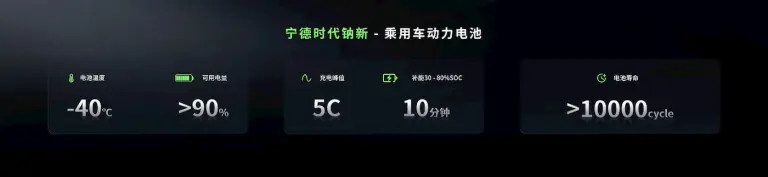
BAIC’s announcement follows closely behind CATL’s recent reveal of sodium-ion batteries in the Changan Nevo A06.
CATL’s “Naxtra” sodium-ion system offers:
- Energy density: up to 175 Wh/kg
- Battery pack: 45 kWh
- Range: up to 400 km (CLTC)
- Future target: 500–600 km
This places sodium-ion batteries firmly within the range expectations of mainstream EV buyers, especially for entry-level and mid-range vehicles.
Why Sodium-Ion Matters: Cost and Supply Chain Stability
The biggest advantage of sodium-ion technology is not just performance — it’s economics.
Compared to lithium:
- Sodium is more abundant
- Less sensitive to price volatility
- Lower raw material costs
This could help manufacturers:
- Reduce EV production costs
- Stabilize supply chains
- Scale production more quickly
As lithium prices fluctuate, sodium-ion offers a strategic alternative that reduces dependency on limited resources.
Industry Growth: Rapid Expansion Ahead
The market is already expanding quickly:
- Global sodium-ion battery shipments: 9 GWh last year
- Growth rate: +150% year-over-year
- Projected output: over 1,000 GWh within four years
This indicates strong confidence from manufacturers and suggests that sodium-ion batteries will play a meaningful role in the EV market in the near future.
Technical Assessment: Strengths and Limitations
Strengths:
- Lower cost compared to lithium-ion
- Excellent cold-weather performance
- Fast charging capability (4C)
- Safer and more stable chemistry
Limitations:
- Lower energy density than high-end lithium batteries (NMC)
- Currently shorter range compared to premium EVs
- Still early in commercialization
This means sodium-ion batteries are best suited for:
- Entry-level EVs
- Urban vehicles
- Cost-sensitive markets
Market Impact: A Complement, Not a Replacement
Rather than replacing lithium-ion batteries entirely, sodium-ion is likely to coexist alongside multiple battery chemistries:
- Lithium-ion (LFP, NMC): higher performance segments
- Sodium-ion: affordability and durability focus
- Solid-state: future high-end solutions
This multi-technology approach allows automakers to tailor battery choices based on vehicle type and price segment.
Conclusion: A Practical Breakthrough with Real Market Potential
Sodium-ion batteries are no longer just experimental — they are approaching real-world deployment at scale.
BAIC’s latest prototype, combined with CATL’s progress, shows that the technology is becoming commercially viable. While it may not match the highest energy densities of premium lithium batteries, it offers a compelling combination of cost, safety, and performance.
Clear opinion:
Sodium-ion batteries are unlikely to replace lithium-ion in the near term, but they are positioned to become a critical part of the EV ecosystem — especially in affordable electric vehicles. If current progress continues, they could significantly lower the cost of EV adoption and expand access to electric mobility worldwide.