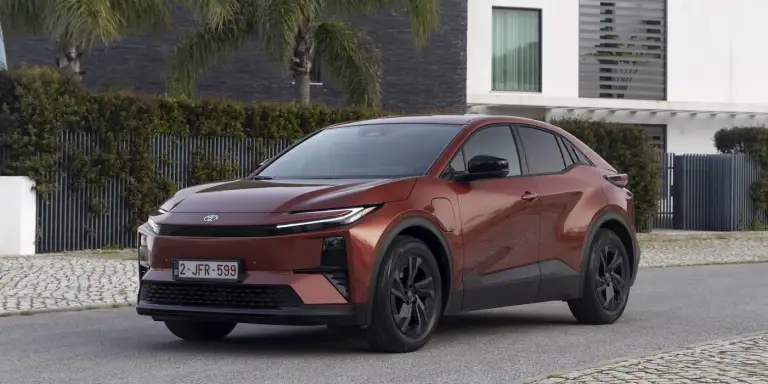
Toyota has officially launched the all-new C-HR+ electric SUV in Europe, marking a major step forward in its EV strategy. Positioned as the electric successor to the popular C-HR crossover, the new model combines updated design, improved performance, and — most importantly — the longest driving range in Toyota’s current EV lineup.
With a WLTP range of up to 607 km, the C-HR+ directly targets mainstream electric SUVs in the €35,000–€50,000 segment, where competition is intensifying rapidly.
Range and Battery: Toyota’s Biggest Improvement Yet
The C-HR+ is offered with two battery options:
- 57.7 kWh (FWD): up to 458 km WLTP
- 77 kWh (FWD): up to 607 km WLTP
- 77 kWh (AWD): up to 548 km WLTP
This is a significant leap for Toyota, which has previously lagged behind rivals in EV range.
In real-world terms, the 607 km WLTP figure translates to roughly 450–500 km of practical driving, placing it on par with key competitors in the segment.
Charging Performance: Competitive, But Not Leading
Using a 150 kW DC fast charger, the C-HR+ can charge:
- 10% to 80% in around 28 minutes
- Under 30 minutes even at -10°C with battery pre-conditioning
While this is solid, it does not yet match newer 800V EV platforms that can charge significantly faster. However, Toyota’s focus appears to be consistency and reliability rather than peak charging speed.
Performance: Surprisingly Strong for an AWD Variant
The all-wheel-drive version stands out in terms of performance:
- Power output: 343 hp (252 kW)
- 0–100 km/h: 5.2 seconds
This makes it one of Toyota’s most powerful non-performance EVs in Europe, offering a balance between everyday usability and sporty driving.
Design and Interior: Familiar, but More Refined
The C-HR+ adopts Toyota’s latest “hammerhead” design language:
- Clean, grille-less front
- Coupe-style SUV silhouette
- More aerodynamic profile
Despite being slightly shorter than the bZ4X, interior space remains competitive, with:
- Generous rear legroom
- Improved headroom for passengers
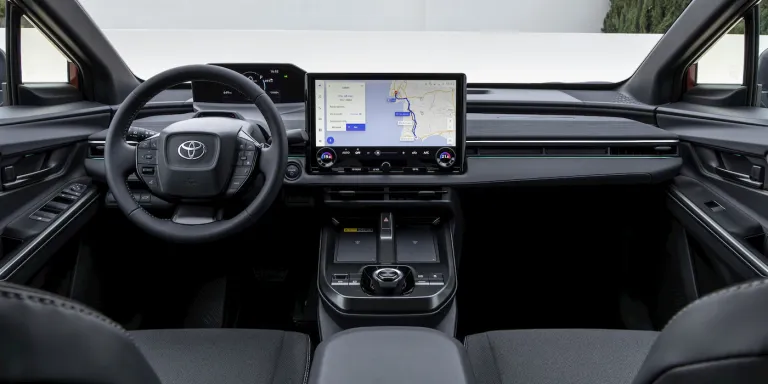
Inside, the cabin features:
- 7-inch driver display
- 14-inch infotainment screen
- Wireless Apple CarPlay and Android Auto
- Optional JBL premium audio system
Overall, the interior feels more modern and user-friendly than previous Toyota EVs.
Pricing and Market Position
In Europe, pricing starts at:
- €38,990 (~$45,000) in Germany
In the US:
- Starting price: around $37,000
- Range: up to 290 miles (EPA)
Comparison with competitors:
- Volkswagen ID.4: €40,000+
- Hyundai Kona Electric: €38,000+
- Tesla Model Y: €45,000+
Where C-HR+ stands:
- More affordable than Model Y
- Similar pricing to ID.4 and Kona
- Competitive range, especially in FWD version
Toyota is clearly aiming for a value-focused strategy, offering strong range without pushing into premium pricing.
Technical Assessment: Strengths and Trade-Offs
Strengths:
- Class-competitive range (up to 607 km WLTP)
- Balanced performance, especially AWD
- Reliable cold-weather charging performance
- Competitive pricing
Limitations:
- Charging speed not class-leading
- No next-gen 800V architecture
- Interior still less premium than some rivals
Final Verdict: A Balanced EV That Finally Puts Toyota Back in the Game
The Toyota C-HR+ represents one of the brand’s most important EV launches in recent years.
It does not dominate in any single category, but it delivers a strong overall package: solid range, practical performance, and competitive pricing. More importantly, it shows that Toyota is catching up in areas where it previously lagged behind.
Clear opinion:
The C-HR+ is not a groundbreaking EV, but it is a well-rounded and competitive option in the compact electric SUV segment. For buyers prioritizing reliability, efficiency, and value over cutting-edge tech, it may be one of the smartest choices currently available in Europe.