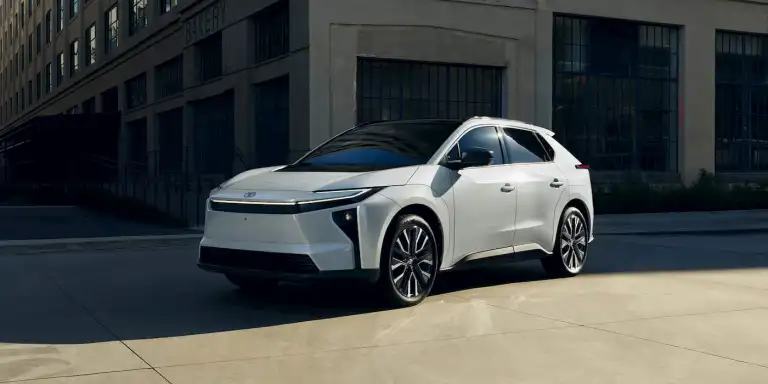
Toyota has given its electric SUV a meaningful upgrade for 2026, dropping the “bZ4X” name in favor of the simpler Toyota bZ and focusing on what buyers care about most: range, charging, and value.
On paper, the improvements are clear. The updated model delivers an EPA-estimated range of up to 314 miles—about 25% more than before—and now includes a native NACS port, allowing access to Tesla’s Supercharger network.
But the more interesting story is what happens off paper.
Real-World Range: Better Than Expected
In independent testing by Edmunds, the 2026 bZ XLE Plus traveled 331 miles on a single charge—17 miles beyond its official EPA estimate.
That matters because real-world range is often lower than advertised. In this case, the opposite happened.
The test, which simulates everyday driving with a mix of city and highway conditions, also showed the bZ consuming 23.3 kWh per 100 miles. That’s about 11% more efficient than its EPA rating, suggesting Toyota’s estimates may be conservative.
How It Compares to Rivals
Even with strong results, the bZ doesn’t lead the segment outright.
The Chevrolet Equinox EV managed 356 miles in the same test, while the Tesla Model Y reached 337 miles. Still, Toyota’s SUV outperformed several established competitors, including the Honda Prologue, Volkswagen ID.4, and Nissan Ariya.
In practical terms, the bZ now sits comfortably in the upper tier of its class, even if it doesn’t top the chart.
Battery Options and Pricing
Toyota offers multiple configurations, but the key decision comes down to battery size.
The base XLE trim starts at $34,900 with a 57.7 kWh battery and 236 miles of range. For $3,000 more, the XLE Plus upgrades to a 74.7 kWh battery and extends range to 314 miles.
That’s a significant jump for a relatively small price increase, making the Plus trim the more compelling option for most buyers.
Higher trims add features and all-wheel drive but reduce range slightly due to increased weight and power demands.
Charging and Everyday Usability
The addition of a native NACS port is one of the most practical upgrades.
In simple terms, it allows the bZ to use Tesla’s extensive Supercharger network without adapters—addressing one of the biggest concerns for EV buyers: charging availability.
Combined with improved charging speeds, the update makes the bZ easier to live with, particularly for drivers who rely on public infrastructure.
Pros and Cons
Pros
- Real-world range exceeds EPA estimates
- Competitive efficiency for its class
- Access to Tesla Supercharger network via NACS
- Strong value, especially in XLE Plus trim
Cons
- Still trails top competitors in maximum range
- Base model range is relatively limited
- No standout performance advantage
- Design and branding remain relatively understated
2026 Toyota bZ prices and range by trim (*excluding $1,450 DPH fee) |
The Bigger Picture
The 2026 bZ represents a shift in Toyota’s EV strategy. Instead of playing catch-up, the company is refining its approach—focusing on reliability, usability, and value rather than headline-grabbing specs.
It’s also gaining traction. The bZ has already climbed to become one of the top-selling EVs in the US, behind only Tesla’s Model Y and Model 3.
That suggests the updates are resonating with buyers.
Final Verdict
The 2026 Toyota bZ isn’t the most powerful or longest-range EV in its segment, but it no longer feels like a compromise.
With improved range, better efficiency, and broader charging access, it has become a well-rounded and competitive electric SUV—particularly for buyers prioritizing practicality over performance.
It may not lead the category, but it now belongs firmly in the conversation.