Walmart is expanding its electric vehicle charging footprint through a new partnership with ABB E-mobility, bringing high-power fast chargers to stores across the United States. The rollout includes initial installations in the Phoenix area, alongside sites in Colorado, Florida, and Georgia.
The Arizona deployment marks one of the first visible phases of a broader national strategy to integrate EV charging into Walmart’s existing retail network.
Charging Where People Already Go
Walmart’s scale gives it a distinct advantage. With more than 5,000 stores nationwide, the company estimates that roughly 90% of Americans live within 10 miles of one of its locations.
By placing chargers at stores customers already visit, Walmart is positioning EV charging as part of routine errands rather than a separate activity. For drivers without access to home charging, this could make fast charging more accessible.
It also aligns with a broader industry trend of colocating chargers with retail destinations.
High-Power Charging With Flexible Output
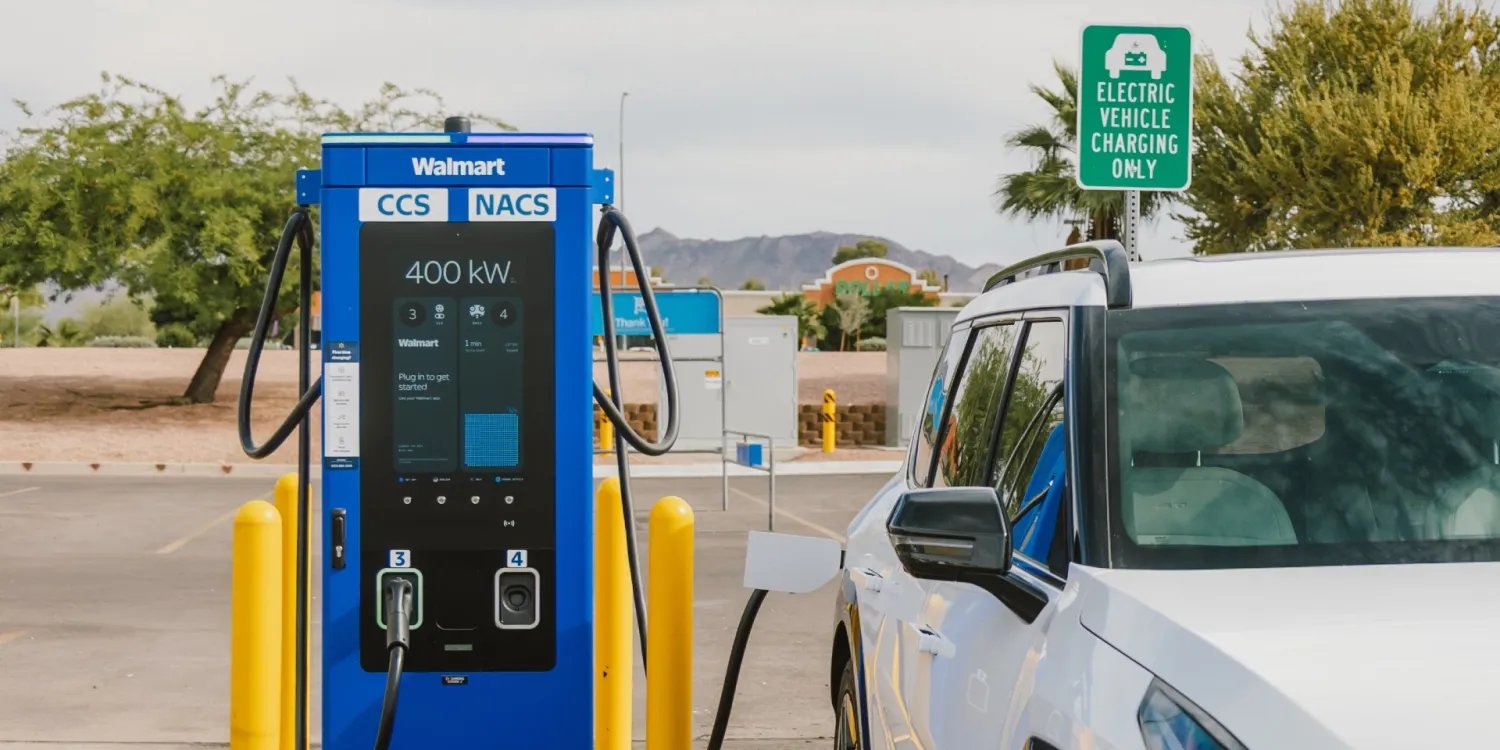
The new sites use ABB’s A400 All-in-One DC fast chargers, which can deliver up to 400 kW of power. In practical terms, that allows compatible vehicles to charge quickly, while also supporting shared charging—two vehicles can draw up to 200 kW each at the same unit.
The chargers support both CCS and NACS connectors, reflecting the ongoing transition toward broader compatibility across EV brands.
Initial installations are underway in cities including Mesa, Tempe, Apache Junction, and Queen Creek, with additional locations expected to come online in the coming months.
Designed for Scale and Reliability
ABB says the A400 system is engineered for high uptime, with a target reliability of 99%. Each unit includes a built-in display that can be used for charging information as well as advertising or promotions.
The sites are also designed with future expansion in mind. ABB is supplying supporting electrical infrastructure, including switchgear capable of handling additional capacity or integrating battery storage if demand grows.
This suggests Walmart is planning not just for current usage, but for increased EV adoption over time.
A Business Case Beyond Charging
The partnership is not only about infrastructure. Studies indicate that EV chargers can increase store visits by several percentage points, with drivers often spending more time—and money—while waiting for their vehicles to charge.
Walmart is also integrating the charging experience into its mobile app, allowing customers to initiate sessions directly and connect charging with its broader digital ecosystem.
This approach turns charging into both a service and a retail opportunity.
Why It Matters
Retail-based charging is becoming a key part of the US EV ecosystem, complementing highway corridors and dedicated charging networks. Compared to standalone charging sites, locations like Walmart offer amenities, convenience, and existing foot traffic.
As more automakers adopt fast-charging standards and battery capacities grow, access to high-power chargers in everyday locations could play a larger role in EV adoption.
Takeaway
Walmart’s collaboration with ABB highlights how large retail networks are becoming part of the EV infrastructure landscape. By combining high-power charging with widely accessible store locations, the initiative reflects a shift toward integrating charging into everyday consumer behavior.