
BYD is pushing deeper into Europe’s premium EV market with the debut of its luxury sub-brand Denza—and it’s doing so with a clear message: fast charging is the next battleground. The new Denza Z9 GT, unveiled at the Paris Opera House with help from Daniel Craig, combines high الأداء performance with ultra-fast charging tech that aims to rival the convenience of gasoline.
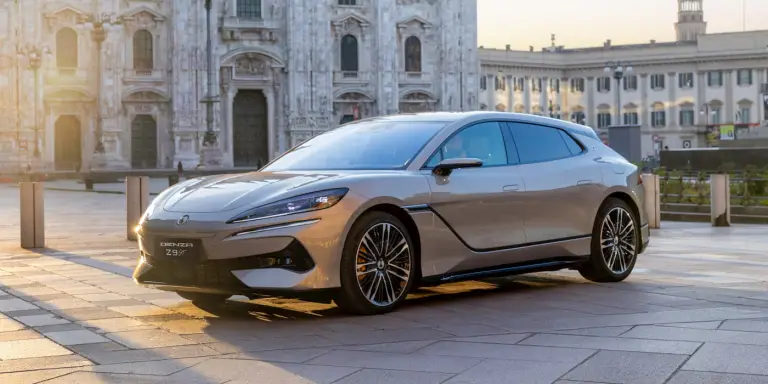
At first glance, the Z9 GT looks the part. Its long, low shooting brake profile puts it in the same visual league as the Porsche Panamera and Porsche Taycan—two benchmarks in Europe’s premium segment. But BYD is betting that design alone isn’t enough. Instead, it’s leaning heavily on what it calls “Flash Charging” to stand out.
Charging in Minutes, Not Hours
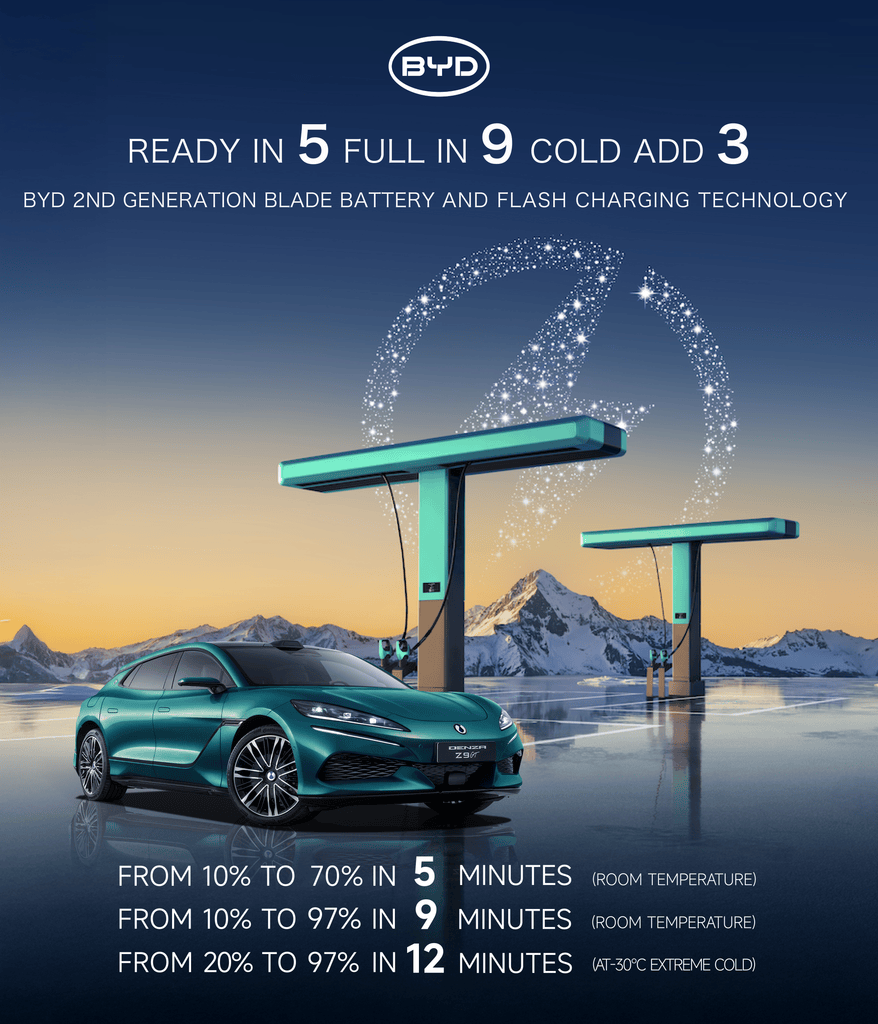
The headline feature is speed. Using BYD’s new Blade Battery 2.0 and high-power charging system, the Z9 GT can go from 10% to 70% battery in about five minutes under ideal conditions. A near full charge (10% to 97%) takes roughly nine minutes.
In simple terms, that’s approaching the time it takes to refuel a traditional car—something EVs have long struggled to match.
Even in cold weather, where EV performance typically drops, BYD claims the system adds only a few extra minutes. That’s significant for European drivers, where winter conditions often expose the limitations of current charging networks.
However, there’s a catch: these speeds depend on ultra-high-power chargers (up to 1,500 kW), which are not yet widely available in Europe. In real-world use, most drivers will rely on slower infrastructure—meaning the full benefit may take years to materialize.
Big Battery, Bigger Performance
The fully electric version of the Z9 GT packs a 122 kWh battery and a tri-motor setup producing around 1,140 horsepower. That puts it firmly in high-performance territory, rivaling top trims of the Taycan.
Range is competitive but not class-leading by European standards. The WLTP estimate of up to 599 km (about 372 miles) is solid, though not dramatically ahead of rivals. It’s worth noting that BYD’s much higher China-rated range (CLTC) doesn’t translate directly to real-world European driving.
Still, for most users, the combination of long range and ultra-fast charging could reduce range anxiety more effectively than simply increasing battery size.
Price and Positioning
In markets like Germany and France, the Z9 GT starts at around €115,000—placing it just below the Panamera and in line with premium EV competitors.
That pricing is striking when compared to China, where the same model starts at under $40,000. The gap highlights the cost of entering Europe, including taxes, logistics, and brand positioning. It also raises a key question: can BYD convince European buyers to choose a relatively new luxury name over established brands?
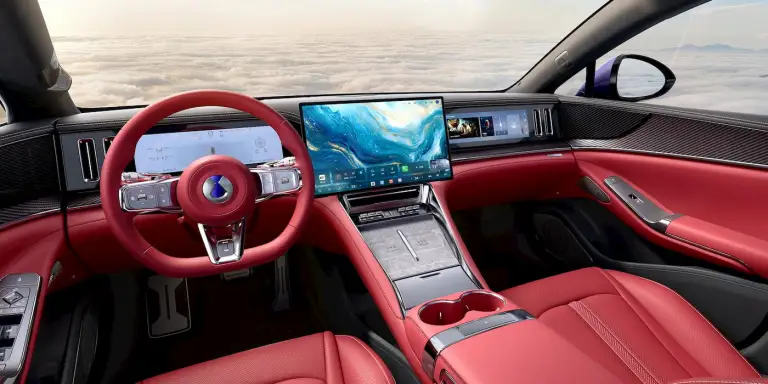
The answer may depend less on price and more on perceived innovation.
Pros and Cons at a Glance
Pros:
- Breakthrough charging speed (on supported infrastructure)
- High performance with tri-motor setup
- Premium design comparable to established luxury brands
- Strong cold-weather charging claims
Cons:
- Charging speeds depend on limited next-gen infrastructure
- Brand recognition in Europe is still developing
- Real-world range advantage is modest
- Large price gap compared to China

The Bigger Picture
BYD’s strategy is clear: instead of competing purely on range or price, it’s trying to redefine convenience. If charging can truly take minutes instead of hours, the EV experience changes fundamentally.
That’s a compelling vision—but it hinges on infrastructure catching up.
Conclusion
The Denza Z9 GT is less about beating rivals on traditional specs and more about shifting expectations. By focusing on ultra-fast charging, BYD is targeting one of the biggest psychological barriers to EV adoption.
It’s an ambitious move—and potentially a smart one. But until Europe’s charging network evolves to support these speeds, the Z9 GT’s most impressive feature may remain more promise than everyday reality.


