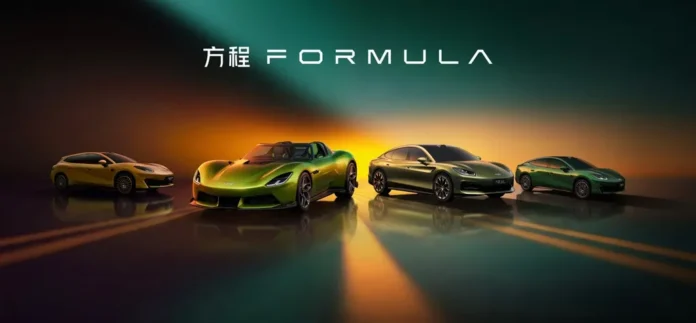
BYD is no stranger to ambitious claims, but calling the Denza Z the “world’s first intelligent electric supercar” sets a high bar—even by EV industry standards. Unveiled at the Beijing Auto Show, the Denza Z is positioned as a direct challenger to Europe’s most exclusive performance brands.
That’s not just bold marketing. It’s a signal of intent.
A Supercar That Blends Speed With Software
On paper, the Denza Z checks all the right boxes for a modern electric supercar. It produces over 1,000 horsepower and can sprint from 0 to 100 km/h in under two seconds—putting it in the same performance bracket as hypercars from Ferrari and Lamborghini.
But BYD is trying to differentiate in a different way.
Instead of focusing purely on speed, it’s emphasizing “intelligence”—a mix of advanced battery tech, vehicle control systems, and software-driven performance. The idea is simple: make the car not just fast, but adaptable, stable, and easier to control at extreme limits.
That’s where things get interesting.
Design: European Influence, Chinese Execution
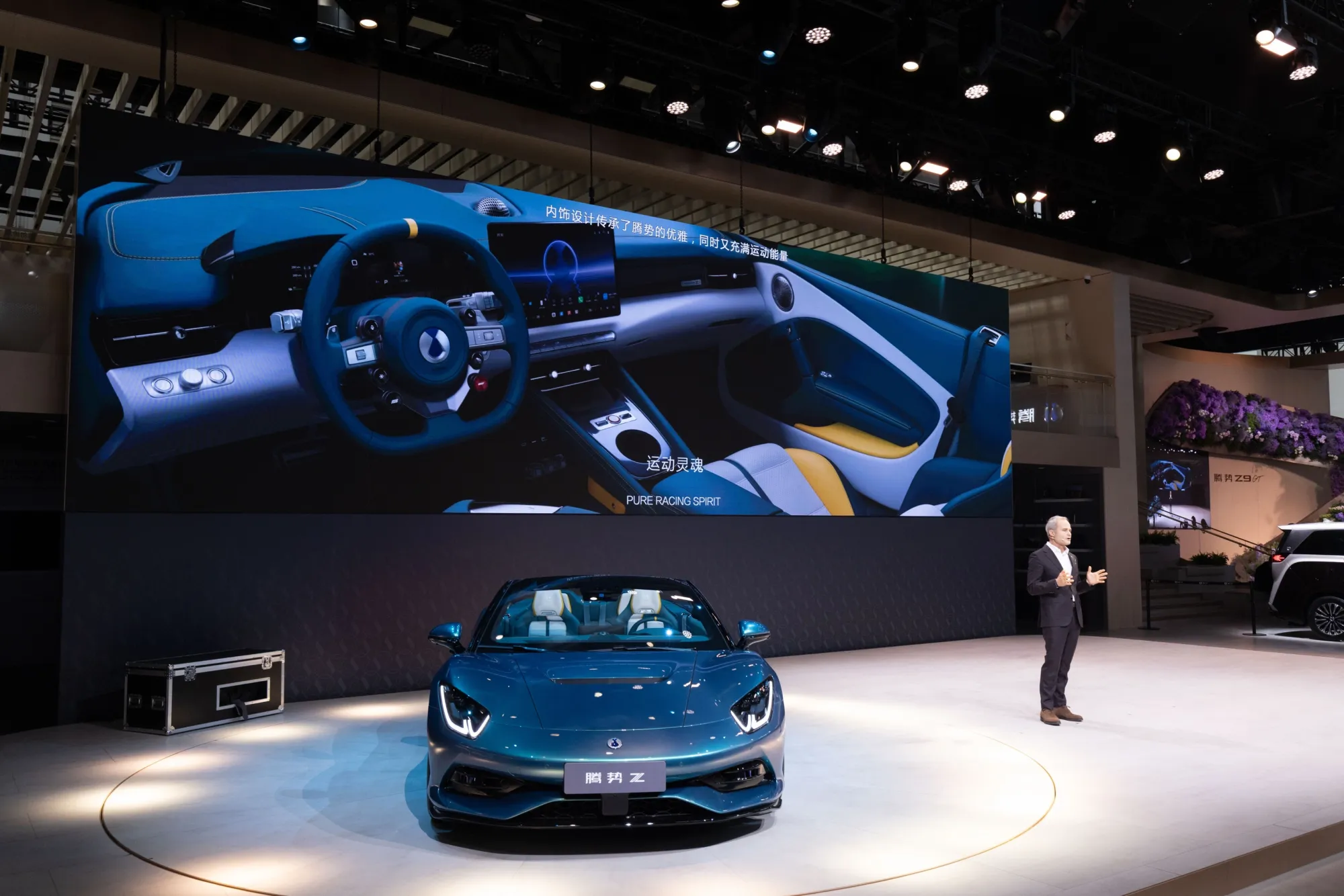
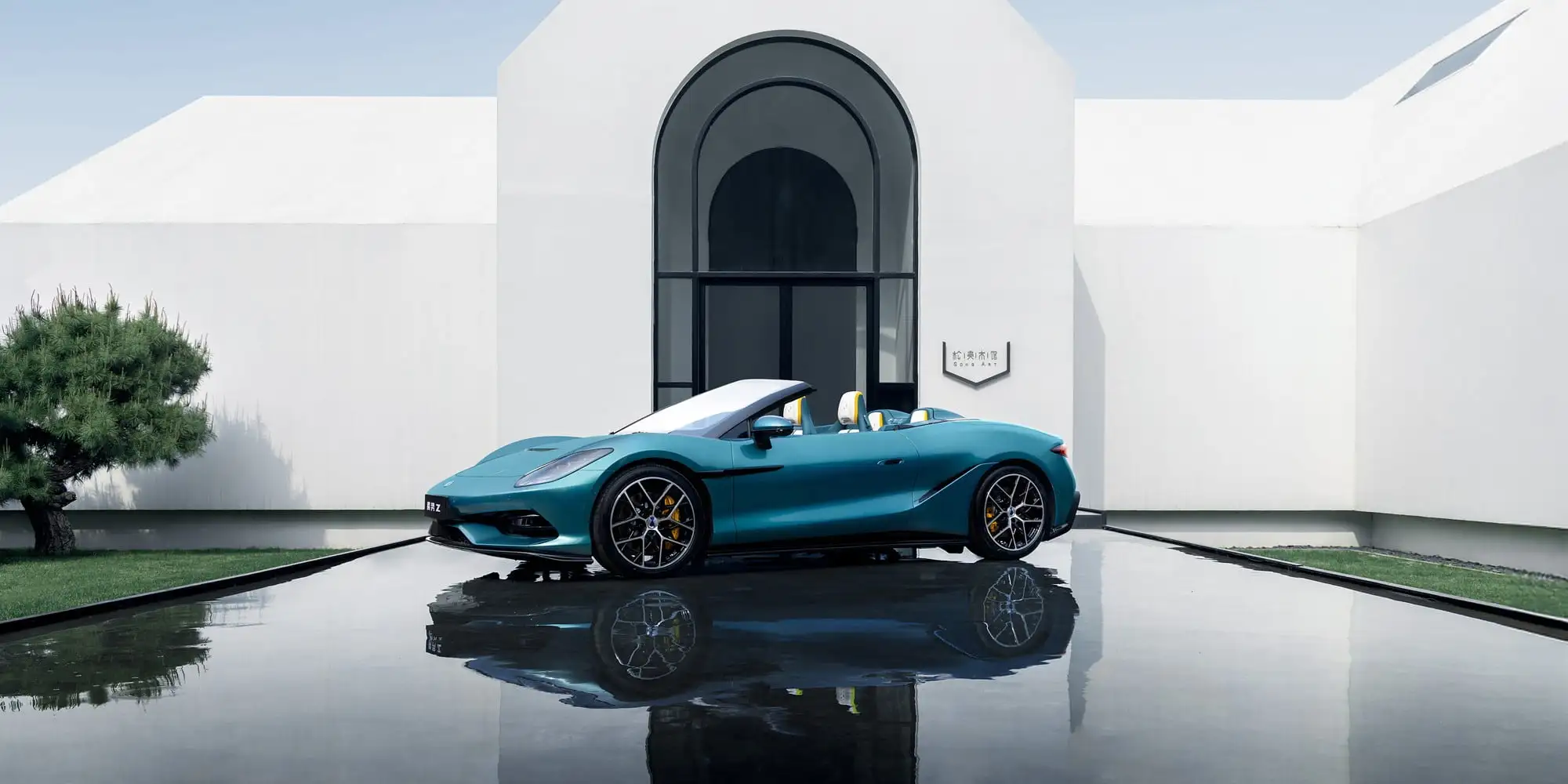
The Denza Z’s design is led by Wolfgang Egger, a veteran designer with experience at top European brands. The result is a convertible supercar with familiar proportions—low, wide, and aggressive—but with subtle differences in detail and philosophy.
It uses a “Pure Emotion” design language, featuring:
- A carbon fiber body to reduce weight
- Sculpted air ducts to increase downforce
- A soft-top convertible layout with four seats
That last point stands out.
Most supercars are strictly two-seaters, prioritizing performance over practicality. The Denza Z’s four-seat configuration suggests BYD is aiming for something slightly different—a supercar you can actually live with.
Battery and Charging: Fast Enough to Change Behavior?
The Denza Z runs on BYD’s Blade Battery, paired with its new Flash Charging 2.0 system. The company claims it can recharge in as little as five minutes under ideal conditions.
If that holds up in real-world use, it could fundamentally change how people think about EV charging—bringing it closer to the convenience of refueling a gas car.
But there’s an important caveat.
Ultra-fast charging at that level requires specialized infrastructure that is still limited, even in China. For most users, charging times will likely be longer.
Still, expected range figures—around 599 km (372 miles), similar to the Denza Z9 GT—are strong for a high-performance vehicle.
Performance Tech: More Than Just Power
Beyond raw horsepower, the Denza Z features BYD’s Disus-M intelligent body control system, also used in the Yangwang U9. In simple terms, it continuously adjusts the car’s suspension and balance in real time to improve grip, comfort, and stability.
Think of it as software actively helping the car stay planted at high speeds or through corners.
BYD is already testing the Denza Z at the Nürburgring—widely considered the ultimate proving ground for performance cars—ahead of its global debut at the Goodwood Festival of Speed.
That’s a clear attempt to build credibility.
Pricing and Positioning: Ambition Meets Reality
While official pricing hasn’t been announced, the Denza Z is expected to cost more than the Z9 GT, which starts around €115,000 ($134,500) in Europe.
That places it firmly in premium territory—but still well below the million-dollar hypercars it claims to compete with.
This creates an interesting tension.
Is the Denza Z a true rival to Ferrari and Lamborghini, or is it a high-performance bargain alternative?
Right now, it looks more like the latter.
Pros and Cons
Pros
- Extreme performance with sub-2-second acceleration
- Advanced battery and charging technology
- More practical four-seat configuration
- Competitive pricing relative to European supercars
Cons
- Charging claims depend heavily on infrastructure
- Brand prestige still lags behind European rivals
- Limited real-world validation of performance and durability
- “Intelligent supercar” concept may feel abstract to buyers
The Bigger Picture
The Denza Z isn’t just a car—it’s a statement about where the global auto industry is heading.
For decades, the supercar segment has been dominated by European brands, built on heritage, craftsmanship, and exclusivity. BYD is challenging that formula with technology, speed, and relative affordability.
It’s a different kind of luxury—less about history, more about innovation.
Whether that resonates with buyers remains to be seen.
Final Verdict
The Denza Z is one of the clearest signs yet that Chinese automakers are ready to compete at the very top of the performance market. It combines staggering speed, advanced tech, and a more practical design in a way that traditional supercars rarely attempt.
But credibility takes time.
Until BYD proves that the Denza Z can deliver consistent performance, reliability, and real-world usability, it will remain an ambitious challenger rather than a true disruptor.
Still, if it delivers—even close to its promises—it could mark the beginning of a new era in the supercar world.