Honda is significantly revising its electrification strategy after reporting the largest loss in the company’s modern history, signaling a broader shift back toward hybrids as global EV competition intensifies.
During its latest earnings presentation, Honda confirmed it will no longer target a full phase-out of gasoline-powered vehicles by 2040. Instead, the company says it now aims to achieve carbon neutrality by 2050 through a mix of battery-electric vehicles, hybrids, carbon-neutral fuels, and offset technologies.
The announcement follows a difficult financial year for the automaker.
For the fiscal year ending March 2026, Honda reported EV-related losses of roughly 1.45 trillion yen ($9.2 billion), contributing to operating losses of 414.3 billion yen ($2.6 billion). The company estimates the broader cost of restructuring its EV strategy could eventually reach 2.5 trillion yen, or about $15.7 billion.
It marks Honda’s first annual loss since becoming publicly traded in 1957.
The company had already signaled trouble earlier this year when it abruptly canceled three planned EV projects in the United States, including production plans tied to its Ohio EV hub. Honda also suspended development of its large-scale EV manufacturing project in Ontario, Canada, indefinitely.

Now the company is pivoting toward a more gradual electrification approach centered around hybrids.
CEO Toshihiro Mibe said Honda plans to begin launching a new generation of hybrid vehicles starting next year. The upcoming models will use a redesigned hybrid system and platform that the company says will improve fuel efficiency by more than 10% while reducing costs by over 30% compared to Honda’s current hybrid technology.
By the end of the decade, Honda expects to introduce 15 new hybrid models globally.
North America remains central to that strategy. Honda said it plans to expand its hybrid lineup in larger vehicle segments, including D-segment models and above, categories that typically include midsize SUVs and family-oriented vehicles that continue to perform strongly in the US market.
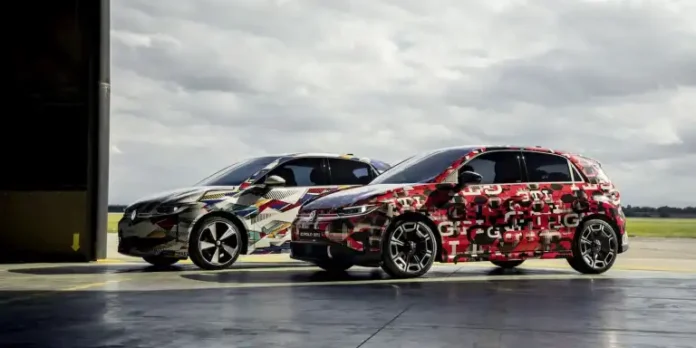
As part of the announcement, Honda previewed two upcoming hybrid products: the Honda Hybrid Sedan Prototype and the Acura Hybrid SUV Prototype. Both are expected to reach production within the next two years.
The shift also affects Honda’s manufacturing footprint.
After abandoning plans to build several next-generation EVs at its Ohio facility, including the all-electric 0 Series SUV, Saloon, and Acura RSX EV, Honda said it will repurpose available production capacity for hybrid and gasoline-powered vehicles instead.
The company is also modifying part of its battery manufacturing operations. Honda confirmed that sections of its joint venture battery plant with LG Energy Solution will now be used to produce batteries for hybrid vehicles rather than exclusively for EVs.
The decision reflects broader challenges facing several traditional automakers.
While global EV sales continue to grow overall, demand in key markets has become more uneven than many companies expected several years ago. At the same time, competition from lower-cost Chinese EV manufacturers such as BYD has intensified pricing pressure, particularly in segments where profitability is already thin.
Honda acknowledged those challenges directly, stating that it struggled to deliver EV products offering stronger value than newer competitors.
Hybrids, by contrast, have remained a relatively stable source of demand for many Japanese automakers. Vehicles that combine gasoline engines with electric assistance typically require smaller batteries, lower production costs, and less charging infrastructure while still improving fuel efficiency and reducing emissions.
That positioning has helped companies like Honda and Toyota maintain stronger profitability during periods of slower EV adoption.
Still, Honda is not abandoning EVs entirely.
The company continues to frame electrification as part of its long-term strategy, but its latest restructuring suggests the transition may take longer and cost significantly more than originally anticipated. Honda expects most of its EV-related restructuring losses to be resolved by the fiscal year ending March 2029.
For now, the company appears focused on stabilizing profitability and rebuilding competitiveness through hybrids while continuing to invest more selectively in future EV development. The shift highlights how legacy automakers are increasingly adjusting electrification timelines in response to changing market conditions and rising development costs.