Waymo is significantly expanding the footprint of its autonomous ride-hailing service, growing its robotaxi coverage area to more than 1,400 square miles across 11 US cities.
The increase represents roughly 300 additional square miles of service coverage compared to earlier estimates from April 2026 — an expansion of about 27%. To put that scale into perspective, Waymo’s active robotaxi territory is now larger than the entire state of Rhode Island.
The latest growth wave begins in Miami, with additional expansions planned for Austin, Atlanta, Houston, and the San Francisco Bay Area.
Importantly, Waymo is not entering entirely new markets with this announcement. Instead, the company is deepening operations within cities where it already has regulatory approval, mapped infrastructure, and established rider demand. That reflects a broader shift in the autonomous vehicle industry from limited pilot programs toward scaling commercial operations inside existing urban networks.
Miami has become one of the clearest examples of that strategy.
Waymo initially launched in the city earlier this year with a roughly 60-square-mile service zone covering neighborhoods including Wynwood, Brickell, Coral Gables, and the Design District. In April, the company expanded to include Miami Beach and major highways such as I-95, the Dolphin Expressway, and the Palmetto Expressway.
The latest announcement indicates the company is continuing to broaden that operational footprint further across the region.
Across the US, Waymo’s estimated city-by-city coverage has already grown substantially over the past year. Phoenix remains its largest market at roughly 315 square miles, followed by the San Francisco Bay Area at around 260 square miles. Other cities, including Los Angeles, Austin, Atlanta, Orlando, Dallas, and Houston, have also seen gradual service expansion as the company refines its autonomous driving systems and operational logistics.
The scale-up comes during a major growth phase for the Alphabet-owned company.
Earlier this year, Waymo raised $16 billion at a reported valuation of $126 billion, the largest funding round yet for an autonomous vehicle company. The company says it now provides more than 20 million trips and operates a fleet of approximately 3,000 robotaxis across its markets.
Waymo is targeting 1 million paid rides per week by the end of 2026.
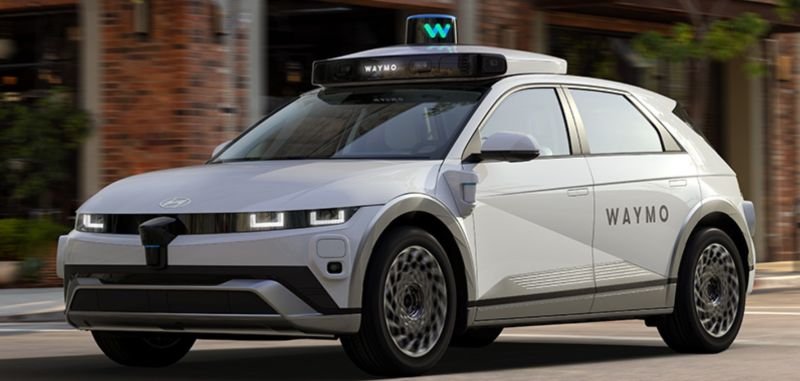
A key part of that expansion is its sixth-generation Waymo Driver platform, which began deployment earlier this year. The system is built on the Zeekr RT platform and uses Waymo-designed sensors manufactured in Mesa, Arizona.
The expansion also highlights the widening operational gap between Waymo and Tesla in autonomous ride-hailing.
Tesla has been gradually scaling its own Robotaxi program in Austin, Houston, and Dallas, but its operational footprint remains much smaller. Tesla currently operates a relatively limited fleet in Austin and only recently expanded beyond its original geofenced area there. Its Houston and Dallas launches also began with comparatively small coverage zones.
There are also differences in operational approach.
Waymo’s service is fully driverless across its active coverage areas, while many Tesla robotaxi rides still involve a safety driver. Tesla’s rides are generally cheaper per mile, but available data suggests Waymo currently delivers shorter wait times and broader service coverage.
At the same time, Tesla continues to prioritize rapid software iteration and lower operating costs, while Waymo focuses more heavily on mapped environments and gradual expansion. The two companies are increasingly pursuing different models for scaling autonomous transportation.
For Waymo, the latest expansion signals that the company is moving beyond limited demonstrations and toward larger-scale urban deployment. While autonomous ride-hailing still faces regulatory, infrastructure, and operational challenges, the growing coverage area shows how quickly commercial robotaxi networks are beginning to scale in select US markets.