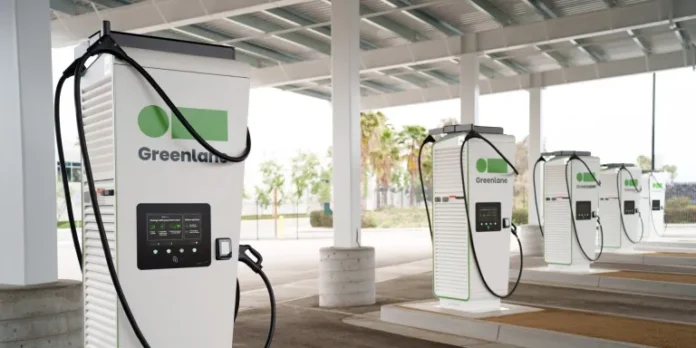
ABB E-mobility is taking aim at one of the hardest problems in electrification: how to keep massive charging sites running efficiently as electric fleets scale up. Its new OM X-Series charging platform is designed for high-demand environments like transit depots, freight hubs, and highway charging corridors—places where chargers can’t afford downtime or inconsistent performance.
The key difference is architectural.
Instead of treating each charger as a standalone unit, the X-Series works more like a centralized energy system. ABB says the platform can scale from 800 kilowatts to more than 10 megawatts while supporting over 100 charging points through a shared infrastructure backbone.
That matters because adding more chargers the traditional way doesn’t always improve performance.
Large charging sites often run into problems with power distribution, heat management, maintenance complexity, and grid demand. In many cases, simply stacking more chargers together creates inefficiencies that become expensive over time—especially for commercial operators running fleets around the clock.

ABB’s approach is designed to solve that operational problem rather than just increase charging speed.
At the center of the system is a site-wide DC bus that distributes power dynamically across chargers in real time. In practical terms, this allows energy to flow where it’s needed most instead of dedicating fixed power to each charger. It’s similar to how modern data centers allocate computing resources more efficiently across servers.
Thermal management is another major focus.
The X-Series uses liquid cooling throughout the entire system—including power cabinets, modules, and charging cables. That may sound like an engineering detail, but it has real-world implications: chargers operating continuously at high output generate enormous heat, and excessive heat reduces efficiency, reliability, and lifespan.
ABB claims the system maintains more than 98% energy conversion efficiency even under sustained heavy loads, an area where air-cooled systems often struggle.
The platform also integrates battery storage directly into the DC architecture, which improves efficiency while helping operators reduce peak electricity demand charges. That’s increasingly important as fleet depots move into megawatt-scale energy consumption, where utility costs can spike dramatically during peak hours.
The trade-off, however, is complexity and cost.
This isn’t a solution aimed at small businesses or individual charging stations. Deploying megawatt-scale charging infrastructure requires significant upfront investment, utility coordination, and long-term planning. Operators also need predictable fleet utilization to justify the economics.

But for large commercial fleets, those economics are becoming harder to ignore.
Compared to traditional charger clusters from competitors, ABB’s distributed model offers clearer scalability and potentially lower operational overhead over time. It also positions the company well for future technologies like vehicle-to-grid integration, where EV fleets could eventually store and return energy to the grid during high-demand periods.
That future-facing design may be the platform’s biggest advantage.
As electric trucks, buses, and commercial fleets grow, the industry is moving beyond the question of whether vehicles can charge fast enough. The bigger challenge is whether charging infrastructure itself can operate reliably, efficiently, and profitably at industrial scale.
Conclusion:
ABB’s X-Series reflects a broader shift in the EV industry: charging infrastructure is evolving from simple hardware into complex energy management systems. The companies that solve efficiency, uptime, and scalability—not just charging speed—are likely to shape the next phase of commercial electrification.