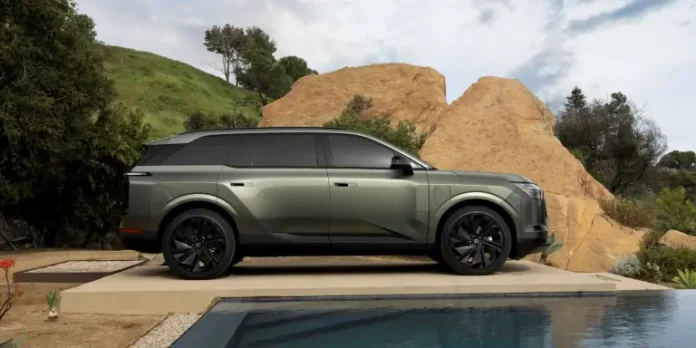
SAIC Motor is doubling down on one of the most talked-about technologies in the EV industry: semi-solid-state batteries. After launching the first mass-produced EV using the technology last year, the company is now bringing it to a larger and potentially more mainstream vehicle—the new MG 4X.
The compact electric SUV is scheduled to officially launch in China on May 11, and it may represent something bigger than just another affordable EV. It could be one of the clearest signs yet that next-generation battery technology is starting to move beyond prototypes and luxury concept cars into real consumer vehicles.
That matters because solid-state batteries have been hyped for years as the future of EVs.
Traditional lithium-ion batteries use liquid electrolytes to move energy between cells. Semi-solid-state batteries reduce that liquid content significantly, improving thermal stability and lowering the risk of overheating or combustion. In simpler terms, they’re designed to be safer, more durable, and potentially more energy-dense than current batteries.

Most automakers are still years away from mass production.
SAIC, however, is already putting the technology into relatively inexpensive vehicles under its MG lineup.
The new MG 4X will reportedly use the company’s semi-solid-state battery even in entry-level trims. According to SAIC, the battery reduces liquid electrolyte content to just 5%, helping improve safety and battery lifespan while also enhancing cold-weather performance.
That last point is especially important in real-world EV ownership.
Cold temperatures remain one of the biggest weaknesses of many electric vehicles, reducing both charging speed and driving range. If semi-solid-state batteries can genuinely improve winter reliability without dramatically increasing cost, that alone could become a major competitive advantage.

The MG 4X itself sits somewhere between a hatchback and a compact crossover.
It’s slightly larger than the standard MG4 EV and closer in size to vehicles like the BYD Atto 3 or Volkswagen ID.3. Buyers will reportedly get two battery options, including a larger 64.2 kWh pack capable of delivering up to 610 km (379 miles) of range under China’s optimistic CLTC testing cycle.
Real-world range will almost certainly be lower.
Still, even after adjusting to more realistic global standards like WLTP or EPA testing, the numbers remain competitive for a relatively affordable electric SUV.
Performance is modest but practical.
Entry-level models use a rear-mounted 167-horsepower motor, while higher trims increase output to 201 horsepower. This is clearly positioned as a mass-market family EV rather than a high-performance showcase, which arguably makes the battery technology even more interesting.

SAIC is trying to scale advanced batteries into affordable vehicles before many rivals can.
That strategy could put pressure on competitors like BYD, Volkswagen, and even Tesla, all of which continue investing heavily in next-generation battery chemistry but have largely kept those technologies out of lower-cost models so far.
The interior reflects how Chinese EV makers increasingly compete on technology as much as price.
The MG 4X features a large 15.6-inch infotainment display, a digital driver cluster, and a new software-focused cockpit developed with smartphone maker Oppo. Like many newer Chinese EVs, the experience appears designed to feel closer to a consumer electronics product than a traditional car.
There are still legitimate questions, though.
Semi-solid-state batteries remain relatively unproven at global scale, particularly regarding long-term durability and repair costs. Charging performance also hasn’t been fully detailed yet, despite SAIC promising improvements over conventional lithium-ion systems.
And while the technology sounds impressive, consumers ultimately care about practical outcomes: lower costs, longer lifespan, safer operation, and fewer compromises during everyday driving.
That’s where the MG 4X could become genuinely important.
Unlike many “future battery” announcements that remain stuck in prototype form, this is a real production vehicle headed to dealerships now. If SAIC can deliver strong reliability and competitive pricing, it may force the broader EV industry to accelerate its own battery transition much sooner than expected.
Conclusion:
The MG 4X isn’t just another compact electric SUV. It may be one of the first real tests of whether semi-solid-state batteries are ready for mainstream adoption. SAIC’s willingness to bring the technology into affordable, high-volume vehicles gives it a potential edge in the next phase of the EV race—and could reshape expectations for what budget-friendly EVs are capable of delivering.